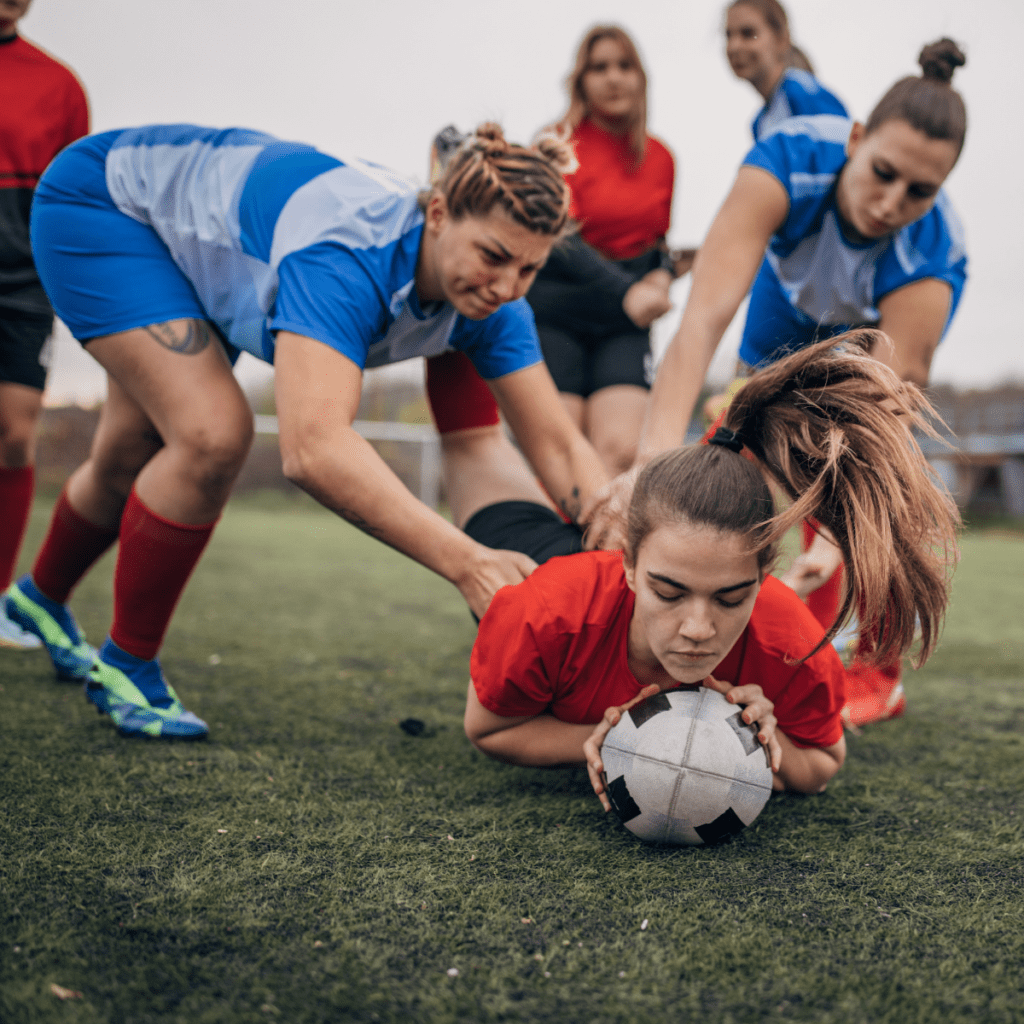
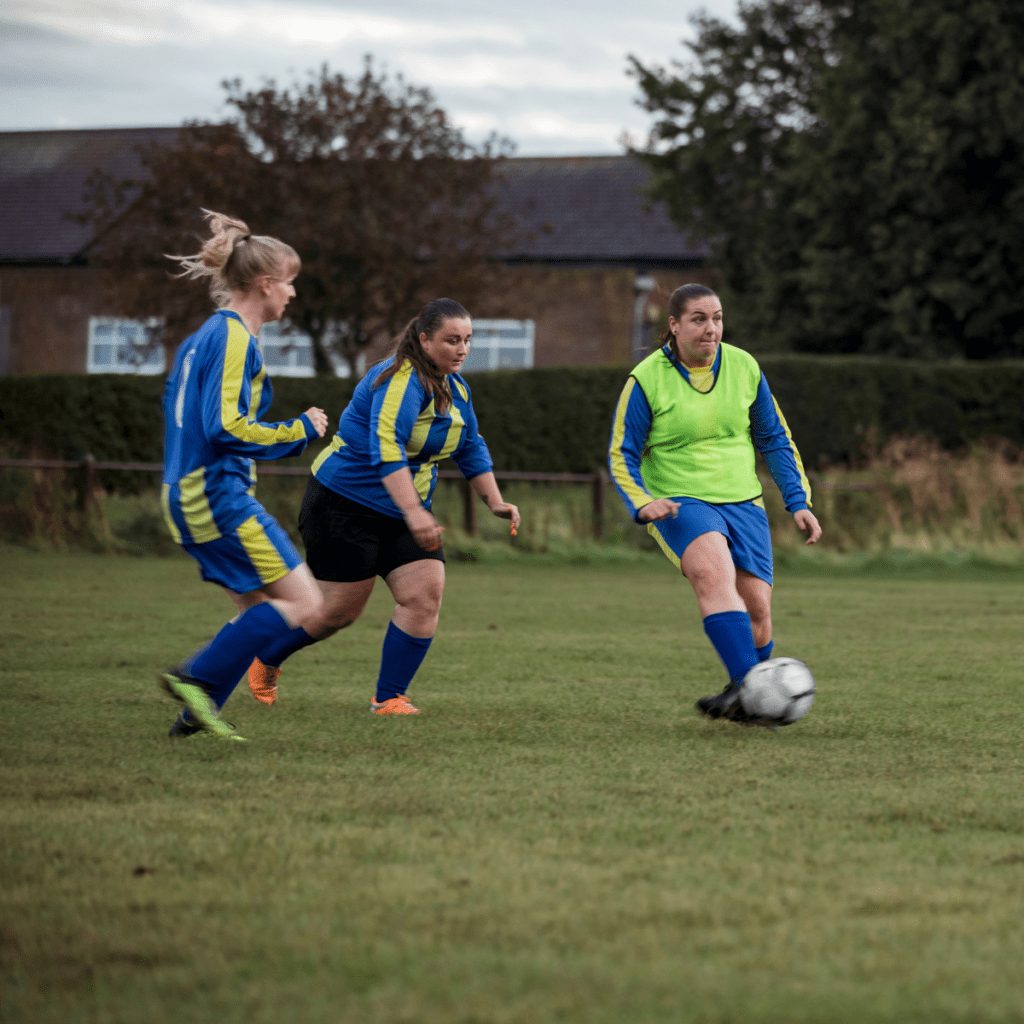
It’s a been a big week for women’s sport in the UK. The Women’s Six Nations kicked off this past weekend, while the Lionesses took on a World Cup qualifier on Tuesday night in a repeat of the Euro 2025 final. Both matches aired on BBC One, underlining the growing prominence and mainstream appeal of England’s women’s teams in the last few years.
Bronwyn Vermaat, Senior Research Manager and Women’s Sport Market Research Expert at M·E·L Research
This moment is part of a much broader surge in visibility and investment. From the UEFA European Women’s Championship 2022, and the Women’s Rugby World Cup in 2025, to the ICC Women’s T20 Cricket World Cup in 2026, to the Tour de France Femmes Grand Départ in 2027, the UK is hosting some of the most prestigious global women’s sporting events in the world. Iconic stadiums such as Wembley, Lord’s Cricket Ground, Twickenham, the Emirates, Stamford Bridge and Old Trafford are now regular backdrops for women’s sporting events.
The UEFA Women’s Euro 2022 broke attendance records. TV stations have increased coverage of women’s football, rugby and cricket. The UK is hosting many women’s sport tournaments. The momentum is real.
But progress in visibility does not automatically mean progress in experience.
What does sexism and misogyny in sport look like in 2026?
Misogyny and sexism are often misunderstood as overt hatred of women. In reality, they are commonly expressed as dismissal, belittling, exclusion or the reinforcement of traditional gender roles. Sometimes it is obvious. Sometimes it is framed as “banter”. Sometimes it is subtle enough that it becomes normalised. And sometimes it appears on the biggest stage in global sport. The recent 2026 Winter Olympics provide telling examples.
When Dutch speed skater Jutta Leerdam delivered record breaking performances on the ice, sections of media coverage and social commentary focused heavily on her relationship with her high-profile male partner, Jake Paul, rather than centring her athletic achievement.
Jutta was often referred to in the media as ‘Jake Paul’s fiancé’, rather than ‘Jutta Leerdam, speed skating champion’. Her record-breaking sprint times, her training and her technical excellence was often overshadowed by who she is engaged to.
Similarly, when fellow Dutch speed skater Femke Kok secured Olympic gold, her coach publicly remarked that the only thing she was missing was “a really nice boyfriend”, prompting debate about how women athletes are framed in moments of sporting success.
These examples matter because they are not isolated incidents. They reflect a broader cultural tendency to centre men in narratives about women’s success or to frame elite female athletes through appearance, relationships or domestic stereotypes.
When coverage shifts in that way, it subtly reinforces the idea that women’s sporting excellence is not the primary story. That is misogyny in practice. It does not always shout. Often, it reframes.
Are women’s matchday experiences improving? And what about the experiences of fans?
Experiences are improving, yes… But not equally. Our 2024 research with Kick It Out surveyed 1,502 female and non-binary football fans and combined quantitative data with qualitative insight to understand lived experience in depth. The findings informed campaigning and sector discussions around improving reporting systems, steward training and matchday culture.
The findings also revealed that 77% of female and non-binary fans feel safe at matches overall. Four in ten said their matchday experience has improved over time (1). That progress matters. It reflects years of effort across the sector to create more inclusive environments.
However, almost a quarter of fans reported feeling unsafe at games. Among fans who are both LGBTQIA+ and from ethnic minority backgrounds, the proportion feeling unsafe was significantly higher (1).
Almost half of female and non-binary fans have witnessed sexist behaviour on matchday (1).Four in ten have personally experienced it (1). Experiences range from being questioned about knowledge of the game to wolf whistling, harassment and in some cases threats of sexual violence (1). And 85 percent of those who had witnessed or experienced abuse had never reported it (1). For both athletes and fans, the playing field is still clearly far from level.
Progress is happening. But it is not universal. For sporting organisations, that distinction is critical. Averages can conceal inequality.
What needs to change to tackle misogyny in sport?
Policy matters. Leadership matters. But evidence underpins both.
Organisations need clear anti-misogyny policies and training. Reporting systems must be trusted and transparent. Representation in senior leadership must reflect the audiences being served.
Most importantly, insight must move beyond headline figures to understand intersectionality. Younger fans, LGBTQIA+ supporters and fans from ethnic minority backgrounds experience the game differently. Strategies must reflect that reality.
The growth of women’s sport presents an opportunity. The sector can choose to scale without scrutiny. Or it can choose to scale with intention.
Women’s sport deserves growth that is both ambitious and inclusive.
Our experience in women’s sport research
At M·E·L Research, women’s sport is a core area of expertise. In 2024, we partnered with Kick It Out to deliver a nationally representative study exploring experiences of sexism and misogyny at matches. The research uncovered not only the prevalence of abuse, but also why most incidents go unreported, and how experiences differ across age, ethnicity and sexuality.
Alongside tackling discrimination, we are supporting Women’s Super League Football with the independent evaluation of the expanded Fan Choice pilot across the Barclays Women’s Super League and Barclays WSL2. Spanning more than 100 fixtures, the evaluation includes large scale fan surveys, focus groups, matchday observations and stakeholder interviews. Mid-season findings from 4,720 fans show a safety rating of 9.4 out of 10, with 70 percent supporting fan choice.
We have also been shortlisted as a finalist at the 2026 Football Business Awards in the Women’s Football Business Award category for our work with the Women’s Super League Football on the Fan Choice pilot project.
Together, this work reflects our commitment to helping sporting organisations grow women’s sport in ways that are inclusive, evidence based and sustainable.
Need support with your own women’s sport social research?
If you are designing, funding or delivering initiatives in women’s sport and want research that combines rigour with empathy, we would love to talk. Whether you are a governing body, charity, league, club or commercial partner looking to understand your audience, evaluate impact or inform future strategy, M·E·L Research can help.
Click the button below to see how our expert researchers can support your goals. Alternatively, you can email the team at info@melresearch.co.uk.
Frequently Asked Questions About Misogyny and Sexism in Women’s Sport
What is misogyny and sexism in sport?
Misogyny in sport refers to prejudice, contempt or hostility directed specifically at women and girls within sporting environments. It can include sexist language, questioning women’s knowledge or legitimacy as fans or athletes, harassment, abuse and the dismissal of discriminatory behaviour as “banter”.
Unlike general sexism, misogyny is specifically targeted at women and is often linked to maintaining traditional gender roles or male dominance within sport.
How common is mysogny and sexism in women’s football?
Research conducted by M·E·L Research in partnership with Kick It Out found that almost half of female and non-binary football fans had witnessed sexist behaviour at matches, and four in ten had personally experienced it (1).
Experiences ranged from being questioned about knowledge of the game to harassment and, in some cases, threats of physical or sexual violence.
Why do female football fans not report sexist abuse?
In the same study, 85 percent of those who had experienced or witnessed sexist or misogynistic behaviour said they had not reported it (1).
The most common reasons included:
Believing it would not make a difference
Thinking it would not be taken seriously
Fear of repercussions from other fans
Uncertainty about how or where to report
Improving trust, visibility and accountability within reporting systems is therefore critical.
How does misogyny and sexism affect engagement in sport?
Experiencing or witnessing sexism can impact how safe and welcome fans feel at matches. Research shows that some fans have been put off attending games due to concerns about sexist behaviour, and others report feeling less engaged with football as a result (1).
For sporting organisations, this represents both a cultural and commercial risk.
Does the media contribute to misogyny and sexism in sport?
Media framing can influence how women athletes are perceived. When coverage focuses on relationships, appearance or personal life rather than performance, it can detract from athletic achievement and reinforce gender stereotypes.
Examples from recent Winter Olympic coverage demonstrate how narratives can shift away from performance and towards personal relationships, prompting wider debate about how women athletes are portrayed.
How can sporting organisations tackle misogyny and sexism?
Effective approaches typically include:
Clear anti-misogyny and anti-discrimination policies
Visible and trusted reporting mechanisms
Staff and steward training
Leadership accountability
Independent research and evaluation
An intersectional approach that recognises differing experiences across age, ethnicity and sexuality
Evidence led strategies are more likely to produce sustainable cultural change.
Why is independent research important in women’s sport?
Independent research helps sporting organisations:
Understand the lived experiences of different fan groups
Identify barriers to participation and engagement
Evaluate the impact of policies and pilots
Build credibility with stakeholders
Ensure growth is inclusive and sustainable
As women’s sport continues to expand, robust evidence ensures progress benefits all audiences.
How do we demonstrate the true value of culture and heritage? And are we measuring everything that matters?
These were two of the questions that stood out during the third day of the Culture and Heritage Capital: Putting Theory into Practice conference.
Cultural organisations have long recognised that their impact extends beyond visitor numbers, ticket sales and tourism revenue. Museums, heritage sites and cultural programmes can support mental health and wellbeing, strengthen community connections, create opportunities for learning and preserve our shared…
M·E·L Research is pleased to be working with the British Film Institute (BFI) on a three-year evaluation of the BFI Film Academy programme. Since 2012, BFI Film Academy has supported young people to develop skills, confidence, knowledge and networks and explore routes into careers across the screen industries. The refreshed 2026–2029 programme builds on this experience, creating connected pathways from early engagement through to specialist training, mentoring, placements and industry-facing progression, with a strong emphasis on…
M·E·L Research is pleased to welcome four new colleagues to our growing team, strengthening our research and evaluation expertise as we continue to expand our services and support clients.
The appointments of Laura Karban, Associate Director; Bethan Jewsbury, Senior Evaluation Managers; and Chloe Parker, Research Manager, alongside Rhoslyn Davies, who joins us on a short-term basis to provide additional senior evaluation support, bring a wealth of experience across social research, evaluation, public policy…
It was an absolute honour to attend the Women’s Health Conference in London this week, bringing together clinicians, policymakers, campaigners and others passionate about improving women’s health.
As a researcher specialising in women’s health social research, I was excited to have the opportunity to learn, be challenged and exchange ideas with people who share that passion. And I wasn’t disappointed.
There has (quite rightly) been a lot of discussion recently about the gender health gap. But some of the evidence shared…
We are pleased to be working with the MS Society on new health and care social research exploring how health and care services can better support people with multiple sclerosis (MS) and help reduce avoidable hospital admissions.
The health and care social research study will focus on opportunities for earlier intervention and more coordinated, preventative support, while recognising that hospital admission is sometimes clinically necessary. It will…
Last week, I had the opportunity to speak at Collections Inside & Out, a symposium hosted at National Trust Chirk Castle & Garden, bringing together people working across gardens, horticulture, heritage, collections and interpretation.
I was, perhaps, a slight interloper among so many people with deep horticultural expertise but every presentation was incredibly interesting and I learned a lot – and broadly managed to follow the general flow of what was being said (still not 100% au fait with taxa…
We’re pleased to share that our Commercial Director, Elliot Simmonds, will be speaking at the Collections Inside & Out symposium at National Trust Chirk Castle & Garden on 24 September 2026. Bringing together professionals working across heritage collections, gardens and landscapes, the symposium will explore the relationship between indoor and outdoor heritage and the opportunities created by thinking about them as part of a connected visitor experience.
Elliot’s session, “Integrating Indoor…
M·E·L Research has been named the winner of the Award for Outstanding Contribution to Social Value & Ethical Research 2026 at the UK Enterprise Awards.
The award recognises the values that shape both the work we choose to undertake and the way we deliver it. From building trauma-informed practices into our research to improving inclusion and reinvesting in the communities around us, social responsibility is part of how we operate every day.