Collections inside and out: thinking differently about gardens, heritage and the visitor experience
Last week, I had the opportunity to speak at Collections Inside & Out, a symposium hosted at National Trust Chirk Castle & Garden, bringing together people working across gardens, horticulture, heritage, collections and interpretation.
Elliot Simmonds, Commercial Director, spoke at the Collections Inside & Out symposium
I was, perhaps, a slight interloper among so many people with deep horticultural expertise but every presentation was incredibly interesting and I learned a lot – and broadly managed to follow the general flow of what was being said (still not 100% au fait with taxa/cultivar though!)
Taken together, the presentations across the day highlighted some strikingly consistent themes.
We need to think beyond the collection as an object
Andrew Degg and Susanne Gronnow began the day by looking at Erddig and at the relationship between the house, garden and wider landscape. What emerged very quickly was the importance of refusing to see these as separate visitor propositions.
A garden is not simply something outside a property. It can be experienced visually from within the house. Sound can provide a bridge as visitors move between spaces. The physical environment itself can invite interaction in a way that is fundamentally different from many indoor collections. And of course, inspiration from outside often makes it’s way inside – for example the oriental flower and animal motifs on the Erddig bed.
Gardens are also tactile and offer opportunities to touch, smell, listen and move through heritage rather than simply observe it.
That idea of connection ran throughout the day. Rather than thinking in terms of “the house” and “the garden”, or “the collection” and “the landscape”, the more useful question is often how all of these elements combine to create a single experience of place.
Custodianship means thinking much further ahead
Another theme was time.
Andrew talked about the need to ask what happens if we do not think about the next 50 years. Charlotte Harris pushed that still further in her presentation on designing a heritage garden for a century we cannot predict.
That is quite a challenge.
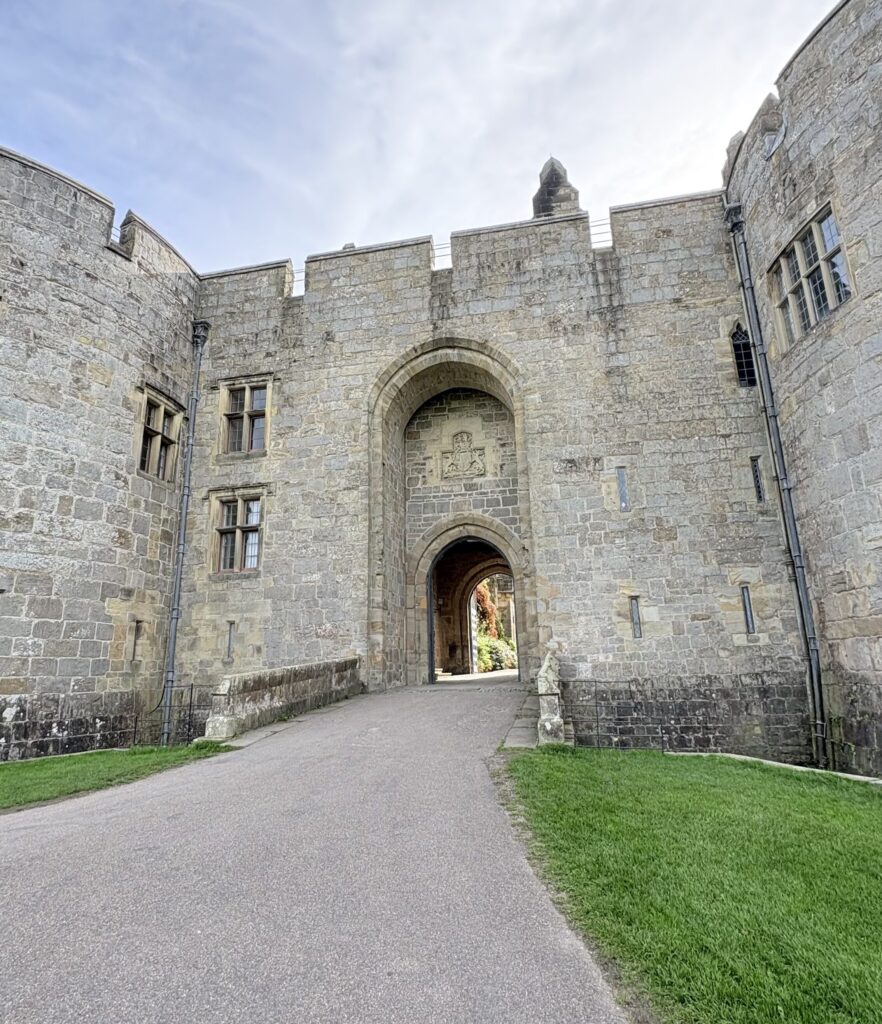
Chirk Castle
Her question was not simply how we predict the future accurately. It was how we design and manage places when we know we cannot.
That means creating space for experimentation and, importantly, for failure. It also means acknowledging that teams cannot experiment if all of their time is consumed by immediate operational pressures. As Charlotte put it, if we want to give people time for experimentation, they cannot constantly be firefighting.
This connected closely with Emily Hazell’s presentation on Chelsea Physic Garden. Climate change, visitor expectations, biodiversity and financial sustainability are not challenges that can be dealt with through a succession of short-term interventions. Gardens operate on much longer timescales. Decisions made now may shape landscapes and plant viability decades from today.
The phrase “current custodians of spaces” felt particularly useful. Heritage organisations inherit places from previous generations and, in turn, pass them on. That changes the nature of the question from “what do we want this space to do now?” to “what are we responsible for passing on?” and also, “if someone wanted to, could they go back to how it was?”
Conservation becomes stronger when people participate in it
Liz Edwards’ presentation on Plant Heritage brought another dimension to this.
Plant records can reveal stories that have historically been hidden within heritage collections, but the Plant Guardians model also demonstrates the potential for audiences to become active participants in conservation.
There is something close to citizen science in that approach. People are not simply receiving information about a collection. They can contribute to its stewardship, knowledge and survival.
Liz framed this around connecting people, plant and place, which has clear parallels with work taking place elsewhere in heritage. Interpretation increasingly seeks to connect people not just with objects, but with stories, landscapes and a broader sense of place – this is something we have worked on extensively with English Heritage for example.
This approach also opens up much wider stories. Plant collections can connect horticulture with social history, trade, medicine, science, colonial histories and even some rather unexpected subjects. The Museum of Cider and hallucinogenic cacti both managed to make an appearance during the discussion.
The broader point is that outdoor collections are not somehow less interpretively rich than indoor ones. In many cases they may provide routes into stories that would otherwise be difficult to tell.
Start with people, not with assumptions about how they behave
One of the strongest connections with some our own research was Charlotte’s observation about dog walkers and families with children.
These are audiences whose relationships with heritage sites may be quite different from those assumed by traditional visitor models.
Someone walking their dog through an estate may visit dozens of times without ever entering the house. A family may primarily value freedom, space and opportunities for children to explore. Someone else may arrive specifically because of the garden and regard the property as secondary.
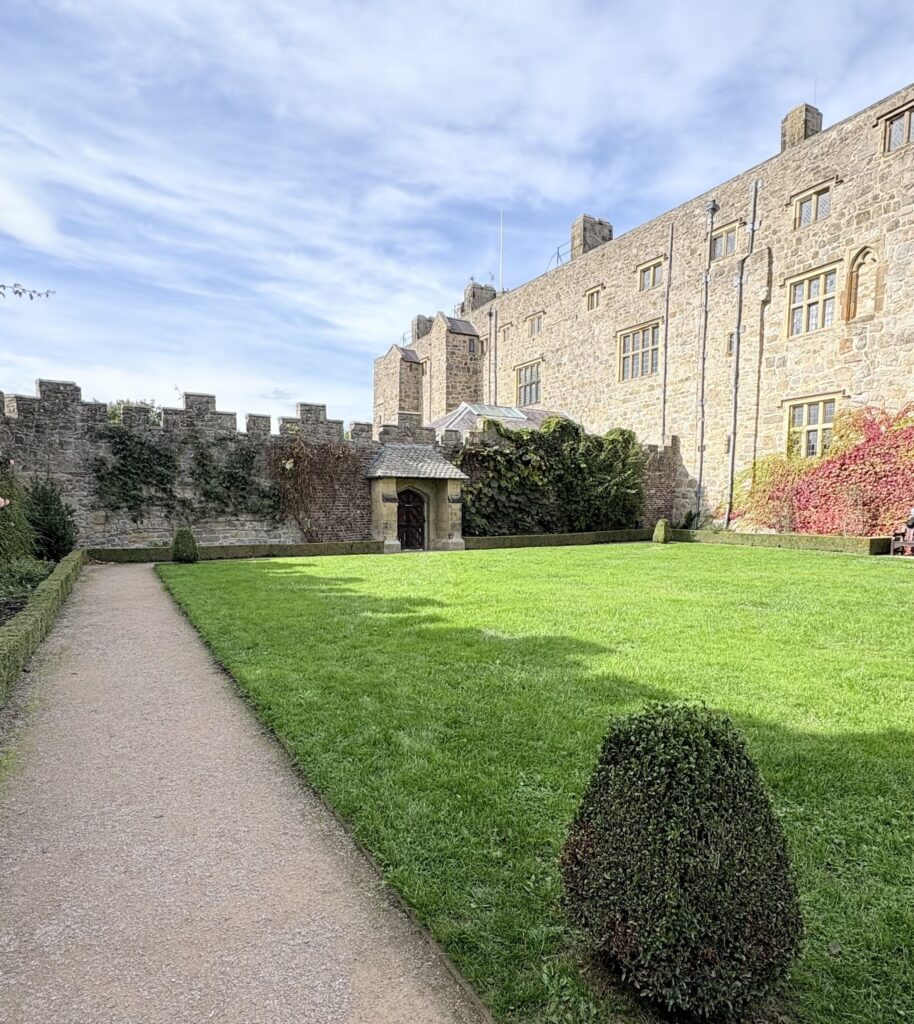
Chirk Castle grounds
None of those relationships is less legitimate and there are strong arguments that they are all in fact ‘ways in’ to a relationship with heritage and heritage sites.
Our own research across museums, heritage organisations and outdoor spaces repeatedly finds that audiences do not necessarily recognise the organisational boundaries that professionals work within.
Visitors experience a place.
They do not necessarily distinguish between collections, horticulture, interpretation, catering, landscape and programming. Their overall judgement may be shaped by all of them – as well as to some extent by their own expectations and pre-conceptions.
That is worth bearing in mind because organisational structures can sometimes inadvertently reinforce distinctions that audiences themselves do not make – for example, very clearly defined ‘inside’ and ‘outside’ teams or remits.
Wonder and delight matter too
Emily Hazell talked about inspiring wonder, which provided an important counterpoint to some of the more operational discussion.
There is an understandable tendency within heritage to frame objectives around learning, conservation, participation, accessibility and wellbeing. All are important.
But people should sometimes just be delighted.
Gardens are particularly powerful in this respect because their impact can be immediate and sensory. Scale, colour, texture, scent, seasonality and unexpected encounters can create memorable experiences without requiring visitors to understand a complex interpretive proposition beforehand.
There may be a lesson here for the wider heritage sector. We often work very hard to explain why something matters. Sometimes the first job may simply be to make somebody stop, look and gasp in awe. This chimes with recent work we have been undertaking for a site in the South of England where we reference ‘the gap to delight’ and also aligns really strongly with our work around emotions in museums and heritage, for AIM.
Art can help us imagine futures rather than simply interpret the past
Grace Davies’ final presentation brought many of these strands together through contemporary art.
Her examples demonstrated how artists can intervene in heritage spaces not simply to interpret existing histories, but to ask audiences to consider what a place might mean now and what its future might look like.
The example of Luke Jerram’s Withdrawn (2015) installation and Richard Woods’ Forever Home at Fountains Abbey are useful illustrations of how contemporary interventions can change the way familiar landscapes are encountered – and a way to make us think.
There is sometimes a perception that contemporary art and historic places sit uncomfortably together. But when it works, the relationship can be productive precisely because it introduces a different perspective – again, our work evaluating English Heritage’s Creative Programme speaks to this.
Heritage is not only about explaining what happened. It can also provide a setting in which we ask what happens next.
Perhaps the real challenge is integration
What struck me most across the day was how consistently the presentations pointed towards the same underlying issue.
We have inherited professional disciplines and organisational structures that separate things which visitors often experience together.
Collections sit inside buildings. Gardens sit outside them. Curators work with objects. Horticulturalists work with landscapes. Interpretation explains stories. Visitor teams manage experiences.
But visitors move between all of these things.
The most interesting work discussed at Chirk was often happening where those boundaries became less important: where plant records became social history; where gardens became interpretive spaces or feedback mechanisms; where contemporary art created new ways into heritage; where visitors became participants in conservation; or where the site and landscape were deliberately understood as one experience.
That also reflected the central message from the research I presented.
Across the sector, there is considerable opportunity to think more deliberately about outdoor spaces as part of the core heritage offer rather than as an adjunct to it.
That requires experimentation. It requires collaboration between disciplines within sites and across them. It requires better understanding of how different audiences actually use these spaces. And, perhaps most importantly, it requires organisations to think on two very different timescales at once: responding to the needs of today’s visitors while acting as custodians of places that will still exist long after all of us have gone.
Need support with your own social research?
Whether you’re a public body, charity, or organisation looking to understand your audience, evaluate impact, or inform future strategies, we’re here to help.
Get in touch with the M·E·L Research team today via our ‘Get in touch’ form below to see how our expert researchers can support your goals. Alternatively, you can email the team at info@melresearch.co.uk.
It was an absolute honour to attend the Women’s Health Conference in London this week, bringing together clinicians, policymakers, campaigners and others passionate about improving women’s health.
As a researcher specialising in women’s health social research, I was excited to have the opportunity to learn, be challenged and exchange ideas with people who share that passion. And I wasn’t disappointed.
There has (quite rightly) been a lot of discussion recently about the gender health gap. But some of the evidence shared…
We are pleased to be working with the MS Society on new health and care social research exploring how health and care services can better support people with multiple sclerosis (MS) and help reduce avoidable hospital admissions.
The health and care social research study will focus on opportunities for earlier intervention and more coordinated, preventative support, while recognising that hospital admission is sometimes clinically necessary. It will…
We’re pleased to share that our Commercial Director, Elliot Simmonds, will be speaking at the Collections Inside & Out symposium at National Trust Chirk Castle & Garden on 24 September 2026. Bringing together professionals working across heritage collections, gardens and landscapes, the symposium will explore the relationship between indoor and outdoor heritage and the opportunities created by thinking about them as part of a connected visitor experience.
Elliot’s session, “Integrating Indoor…
M·E·L Research has been named the winner of the Award for Outstanding Contribution to Social Value & Ethical Research 2026 at the UK Enterprise Awards.
The award recognises the values that shape both the work we choose to undertake and the way we deliver it. From building trauma-informed practices into our research to improving inclusion and reinvesting in the communities around us, social responsibility is part of how we operate every day.
M·E·L Research joined the British Dyslexia Association (BDA) at the House of Lords this week for the launch of a new report exploring the experiences of dyslexic young people who are not in employment, education or training (NEET).
Tamsin Maries, Senior Research Manager, and Elliot Simmonds, Commercial Manager, represented M·E·L Research at the event…
New UK-wide research from M·E·L Research’s SPARK report shows improving mental health indicators alongside continuing exposure to suicide, widespread lifetime suicidal thoughts and significant gaps in practical knowledge.
Suicide prevention depends on understanding not only how many people are affected, but also how confident the public feel about recognising risk, starting difficult conversations and finding appropriate support. The Spring 2026 SPARK report from M·E·L Research brings these issues together, providing a detailed picture of attitudes…
M·E·L Research is pleased to be supporting the Diocese of Manchester with an independent consultation to help inform its future leadership. The research will provide opportunities for people connected with diocesan life, as well as members of the wider community, to share their perspectives on the local context, priorities for the years ahead and the qualities that will be important in future leadership.
Across Europe, we have seen devastating wildfires destroy homes, habitats and communities. They offer us a powerful analogy for how we think about suicide prevention.
When a fire is raging, everything must be done to put it out. Firefighters, emergency services and communities mobilise to save lives. But even when the fire is eventually extinguished, enormous damage may already have been done, and recovery can take years. That is why fire services don’t only fight fires. They also invest in prevention: identifying risks, educating people, installing smoke alarms, creating fire breaks and trying to stop…