M·E·L Research recognised for outstanding contribution to social value and ethical research
M·E·L Research has been named the winner of the Award for Outstanding Contribution to Social Value & Ethical Research 2026 at the UK Enterprise Awards.
The award recognises the values that shape both the work we choose to undertake and the way we deliver it. From building trauma-informed practices into our research to improving inclusion and reinvesting in the communities around us, social responsibility is part of how we operate every day.
For us, ethical research is about more than meeting professional standards because it means thinking carefully about who is involved, whose voices may be missing and how the research process might affect the people taking part. It also means considering the wider impact we can make as an employer, partner and business.
Embedding trauma-informed practice
Research often asks people to discuss sensitive, personal or distressing experiences. A responsible approach must recognise the emotional impact this can have on participants, researchers and everyone involved in the work.
Our trauma-informed research practices are shaped by the principles of safety, trust, choice, collaboration, culture and empowerment. These principles inform how we design our methodologies, communicate with participants and support our research teams.
In practice, this can mean giving participants greater control over how they take part, using sensitive and accessible language, putting appropriate safeguarding procedures in place and providing sources of support where research content may be upsetting. We also recognise the potential impact on our own researchers and build staff care and clear boundaries into project delivery.
This approach helps reduce the risk of causing further harm, while creating the conditions for people to speak openly and share their experiences in a way that feels safe. As well as being the right thing to do, this leads to more thoughtful, honest and useful research.
Turning our commitment to social value into action
We believe businesses have a responsibility to contribute to society, support their communities and reduce their environmental impact.
Our commitment to social value is reflected in practical, measurable actions. We donate 5% of our net profits to charitable causes each year and give every employee two days of paid volunteering leave to support causes that matter to them.
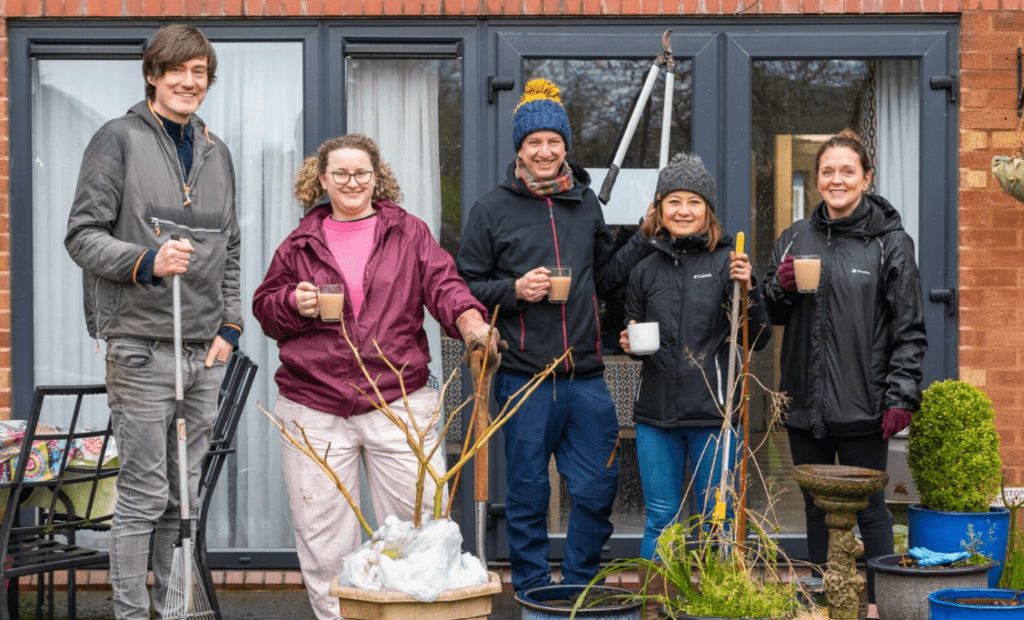
Some of the M·E·L Research team on their volunteer day
We are a Real Living Wage Employer, conduct pro bono research and provide our Research with a Purpose pro bono omnibus service twice a year. This gives charities and organisations working for social good access to research that can strengthen their evidence, inform their work and help them make a greater difference.
We have also signed the MRS Climate Pledge and the Armed Forces Covenant pledge, and have a 12-person corporate social responsibility team made up of colleagues from across M·E·L Research. This helps ensure that our social value activity reflects the interests, ideas and experiences of people throughout the business.
Just as importantly, we are selective about the projects we take on. We choose to work with organisations that are contributing to positive social change and focus much of our research on complex issues and communities whose experiences can too easily be overlooked.
Inclusive research does not happen simply by inviting people to take part. It requires active thought about the barriers different communities may face, how research materials are designed and whether the chosen methods genuinely allow everyone to contribute.
We consider inclusion throughout the research process, from sampling and recruitment through to fieldwork, analysis and reporting. This includes recognising intersectionality, working in partnership with communities, using participatory approaches where appropriate and being transparent about who is represented within the evidence.
We are particularly proud of research that gives seldom-heard and minoritised communities the opportunity to influence the policies and services that affect them. By bringing a broader range of experiences into the evidence, we can help our clients make better-informed and more equitable decisions.
And we apply the same principles within our own organisation! M·E·L Research is a majority women and ethnic minority-owned company, offers flexible working, and provides access to mental health support. We do not offer unpaid internships, and we continue to monitor representation, pay and inclusion across the business.
We also recognise that there will always be more to learn and that EDI cannot be treated as a completed task or a tick-box exercise. We realise true EDI requires continued reflection, honesty and a willingness to improve.
Recognition of a collective effort
Winning this UK Enterprise Award is a proud moment for everyone at M·E·L Research because it recognises the care our team puts into making research safe, inclusive and worthwhile, as well as the contribution colleagues make beyond their day-to-day roles.
Most importantly, the award strengthens our determination to keep improving. Ethical research and social value are ongoing commitments, and we will continue looking for ways to make our work, our workplace and our wider impact better.
We would like to thank everyone across M·E·L Research, along with our clients, partners and research participants, who helps us put these values into practice.
Need support with your own social research?
Whether you’re a public body, charity, or organisation looking to understand your audience, evaluate impact, or inform future strategies, we’re here to help.
Get in touch with the M·E·L Research team today via our ‘Get in touch’ form below to see how our expert researchers can support your goals. Alternatively, you can email the team at info@melresearch.co.uk.
Last week, I had the opportunity to speak at Collections Inside & Out, a symposium hosted at National Trust Chirk Castle & Garden, bringing together people working across gardens, horticulture, heritage, collections and interpretation.
I was, perhaps, a slight interloper among so many people with deep horticultural expertise but every presentation was incredibly interesting and I learned a lot – and broadly managed to follow the general flow of what was being said (still not 100% au fait with taxa…
We’re pleased to share that our Commercial Director, Elliot Simmonds, will be speaking at the Collections Inside & Out symposium at National Trust Chirk Castle & Garden on 24 September 2026. Bringing together professionals working across heritage collections, gardens and landscapes, the symposium will explore the relationship between indoor and outdoor heritage and the opportunities created by thinking about them as part of a connected visitor experience.
Elliot’s session, “Integrating Indoor…
M·E·L Research joined the British Dyslexia Association (BDA) at the House of Lords this week for the launch of a new report exploring the experiences of dyslexic young people who are not in employment, education or training (NEET).
Tamsin Maries, Senior Research Manager, and Elliot Simmonds, Commercial Manager, represented M·E·L Research at the event…
New UK-wide research from M·E·L Research’s SPARK report shows improving mental health indicators alongside continuing exposure to suicide, widespread lifetime suicidal thoughts and significant gaps in practical knowledge.
Suicide prevention depends on understanding not only how many people are affected, but also how confident the public feel about recognising risk, starting difficult conversations and finding appropriate support. The Spring 2026 SPARK report from M·E·L Research brings these issues together, providing a detailed picture of attitudes…
M·E·L Research is pleased to be supporting the Diocese of Manchester with an independent consultation to help inform its future leadership. The research will provide opportunities for people connected with diocesan life, as well as members of the wider community, to share their perspectives on the local context, priorities for the years ahead and the qualities that will be important in future leadership.
Across Europe, we have seen devastating wildfires destroy homes, habitats and communities. They offer us a powerful analogy for how we think about suicide prevention.
When a fire is raging, everything must be done to put it out. Firefighters, emergency services and communities mobilise to save lives. But even when the fire is eventually extinguished, enormous damage may already have been done, and recovery can take years. That is why fire services don’t only fight fires. They also invest in prevention: identifying risks, educating people, installing smoke alarms, creating fire breaks and trying to stop…
My son Jools was 14 years old when he died suddenly in April 2022. There was no note. There was no offline evidence that explained why he died. No one had seen or been aware of any adverse mental health issues, and at his original inquest the coroner could not be sure that Jools was in a suicidal mood. More than four years later, I am still trying to understand what happened to my son. Yet one enormous part of Jools’ life was not properly explored following his death: his digital world. Like almost every teenager, Jools had a life on his phone. Social…
Women’s sport is entering an important new phase, and we have been privileged to work with clients such as Kick It Out, WSL Football, Sport Wales and the Commonwealth Games, and witness and the experiences, impacts and drivers of this growth. Audiences are growing, competitions are evolving and sports organisations are exploring new ways to improve the matchday experience, deepen fan relationships and develop more sustainable commercial models. With that momentum comes significant opportunity, but it also raises important questions. As…