It was an absolute honour to attend the Women’s Health Conference in London this week, bringing together clinicians, policymakers, campaigners and others passionate about improving women’s health.
As a researcher specialising in women’s health social research, I was excited to have the opportunity to learn, be challenged and exchange ideas with people who share that passion. And I wasn’t disappointed.
There has (quite rightly) been a lot of discussion recently about the gender health gap. But some of the evidence shared during the conference was still shocking.
More than eight in ten respondents (84%) to the government’s Women’s Health Strategy survey reported occasions when they, or a woman they had in mind, had not been listened to by healthcare professionals.
Healthy life expectancy for women in England has fallen to just 61.3 years in 2022-24, down from 63.7 years in 2017-19.
One in ten women who have worked during the menopause have left a job because of their symptoms.
The latest MBRRACE-UK figures show that Black women in England are nearly three times as likely to die during or shortly after pregnancy as White women.
These aren’t just statistics. They represent women whose symptoms have been dismissed, whose opportunities have been limited, and whose health has suffered.
As Professor Dame Lesley Regan put it so eloquently, we need to stop admiring the problem and start doing something about it.
Three themes particularly stood out for me.
1. Digital healthcare: opportunity or another barrier?
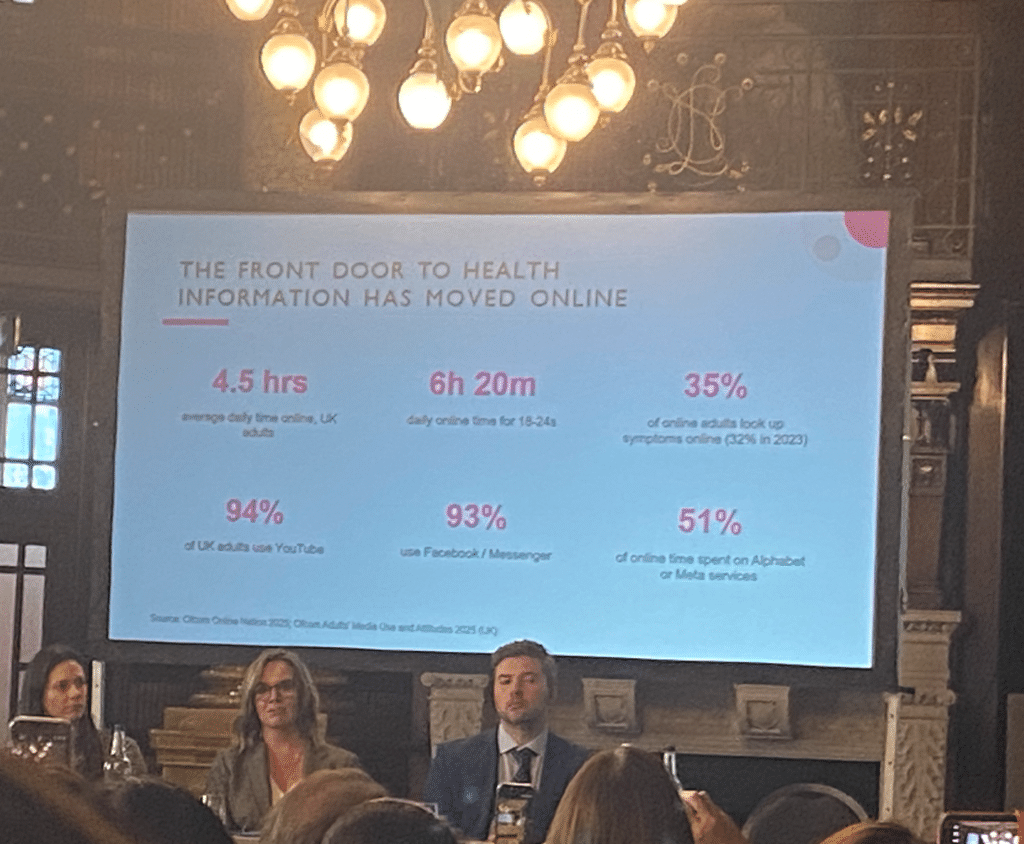
Dr Raj Arora spoke about how the ‘front door’ to healthcare is increasingly digital. We’re turning to ‘Dr Google’ and social media for advice, particularly about subjects that still feel embarrassing or taboo.
And there are real opportunities here. Trusted information from healthcare professionals can be free, accessible, visual and available at 2am when you’re worrying about symptoms.
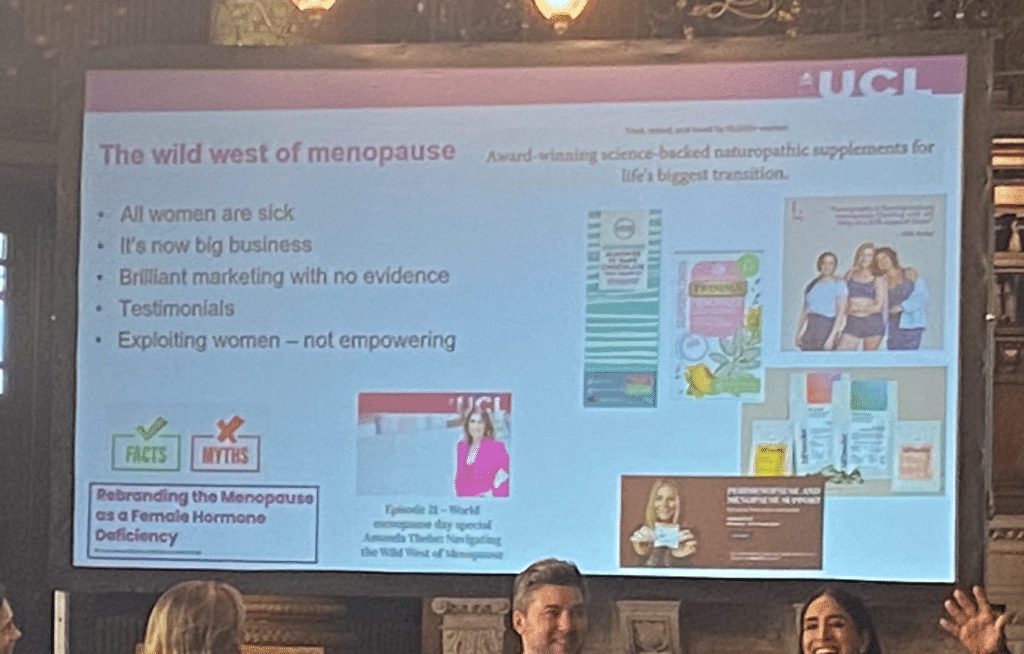
But there’s a darker side too. Misinformation is rife, and women’s health is increasingly a commercial opportunity, with no shortage of people ready to sell us products and treatments that may have little evidence behind them.
For me, the challenge is how we harness the benefits of digital healthcare without creating new inequalities or leaving women to navigate a confusing landscape of conflicting advice.
2. Fragmented services and the postcode lottery
We heard powerful examples of how fragmented commissioning arrangements can prevent women from accessing relatively straightforward treatments.
Dr Zara Haider highlighted the difficulties women can face accessing hormonal intrauterine devices (IUDs) for non-contraceptive purposes. These can be quick to fit and offer important benefits, including managing heavy menstrual bleeding, yet women can face long waits, lengthy journeys or the prospect of paying privately, depending on local arrangements.
It’s a particularly frustrating example of how the way services are organised can get in the way of providing appropriate care.
And it reflects a wider problem across women’s health, including fertility treatment, where access can depend heavily on where you live.
3. Above all, women need to be listened to
This was perhaps the strongest theme of the day, and the one that resonated most with me, both personally and professionally.
Speakers shared powerful experiences of living with conditions including PMDD and endometriosis, and the difficulties of getting symptoms recognised and diagnosed.
Dr Farah Ahmed and Professor Margaret Ikpoh reflected on the limitations of the traditional ten-minute GP appointment. How do we move beyond ‘what’s wrong today?’ to understanding the whole story?
Aparna Belapurkar also demonstrated the value of involving women, particularly those from disadvantaged communities, in shaping the services they use.
As a researcher, this is something I feel particularly strongly about. We cannot design effective, accessible services without understanding the people who need them. And that means listening to women whose voices are too often missing from the conversation, not just those who are confident, articulate or already engaged with healthcare services.
It also means recognising that there is no single ‘women’s experience’. Age, ethnicity, income, disability, geography and personal circumstances all shape our experiences of healthcare, and the barriers we face.
From listening to action
I came away from the conference feeling two things. Frustration that so many of these problems are longstanding and well documented. But also genuine optimism, inspired by the expertise, commitment and determination of the people working to change things.
At M·E·L Research, we’re privileged to hear firsthand about women’s experiences of healthcare through our research across areas including menopause, fertility and breast cancer. These are often deeply personal and sometimes difficult conversations. They reinforce the importance of sensitive, inclusive and trauma-informed approaches to research, and of creating spaces where women feel comfortable sharing their experiences.
But listening is only the starting point. The real value comes from using those experiences to challenge assumptions, inform decisions and design services with women, not simply for them.
You can read our published women’s health reports, here:
If there was one message I took away from the day, it was this: we don’t need more evidence to demonstrate that the gender health gap exists. We need to make sure that the evidence, and women’s voices, are used to drive meaningful change.
As a researcher, and as a woman with lived experience of some of these challenges, that’s something I’m determined to play a part in. And if you’d like to play a part too, I’d love to hear from you.
Need support with your own social research?
Whether you’re a public body, charity, or organisation looking to understand your audience, evaluate impact, or inform future strategies, we’re here to help.
Get in touch with the M·E·L Research team today via our ‘Get in touch’ form below to see how our expert researchers can support your goals. Alternatively, you can email the team at info@melresearch.co.uk.
We are pleased to be working with the MS Society on new health and care social research exploring how health and care services can better support people with multiple sclerosis (MS) and help reduce avoidable hospital admissions.
The health and care social research study will focus on opportunities for earlier intervention and more coordinated, preventative support, while recognising that hospital admission is sometimes clinically necessary. It will…
Last week, I had the opportunity to speak at Collections Inside & Out, a symposium hosted at National Trust Chirk Castle & Garden, bringing together people working across gardens, horticulture, heritage, collections and interpretation.
I was, perhaps, a slight interloper among so many people with deep horticultural expertise but every presentation was incredibly interesting and I learned a lot – and broadly managed to follow the general flow of what was being said (still not 100% au fait with taxa…
We’re pleased to share that our Commercial Director, Elliot Simmonds, will be speaking at the Collections Inside & Out symposium at National Trust Chirk Castle & Garden on 24 September 2026. Bringing together professionals working across heritage collections, gardens and landscapes, the symposium will explore the relationship between indoor and outdoor heritage and the opportunities created by thinking about them as part of a connected visitor experience.
Elliot’s session, “Integrating Indoor…
M·E·L Research has been named the winner of the Award for Outstanding Contribution to Social Value & Ethical Research 2026 at the UK Enterprise Awards.
The award recognises the values that shape both the work we choose to undertake and the way we deliver it. From building trauma-informed practices into our research to improving inclusion and reinvesting in the communities around us, social responsibility is part of how we operate every day.
M·E·L Research joined the British Dyslexia Association (BDA) at the House of Lords this week for the launch of a new report exploring the experiences of dyslexic young people who are not in employment, education or training (NEET).
Tamsin Maries, Senior Research Manager, and Elliot Simmonds, Commercial Manager, represented M·E·L Research at the event…
New UK-wide research from M·E·L Research’s SPARK report shows improving mental health indicators alongside continuing exposure to suicide, widespread lifetime suicidal thoughts and significant gaps in practical knowledge.
Suicide prevention depends on understanding not only how many people are affected, but also how confident the public feel about recognising risk, starting difficult conversations and finding appropriate support. The Spring 2026 SPARK report from M·E·L Research brings these issues together, providing a detailed picture of attitudes…
M·E·L Research is pleased to be supporting the Diocese of Manchester with an independent consultation to help inform its future leadership. The research will provide opportunities for people connected with diocesan life, as well as members of the wider community, to share their perspectives on the local context, priorities for the years ahead and the qualities that will be important in future leadership.
Across Europe, we have seen devastating wildfires destroy homes, habitats and communities. They offer us a powerful analogy for how we think about suicide prevention.
When a fire is raging, everything must be done to put it out. Firefighters, emergency services and communities mobilise to save lives. But even when the fire is eventually extinguished, enormous damage may already have been done, and recovery can take years. That is why fire services don’t only fight fires. They also invest in prevention: identifying risks, educating people, installing smoke alarms, creating fire breaks and trying to stop…