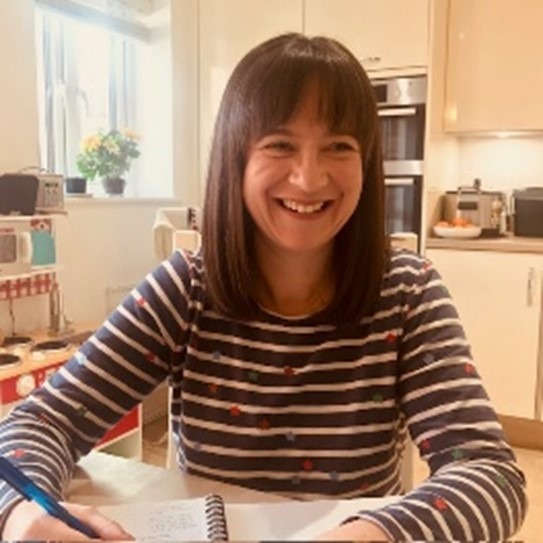
I have recently re-joined the world of research following a couple of years away recovering from Long COVID. I’ve discovered that not only have I really missed it and that everyone is a lot younger, but that everything really has moved on. There are new methodologies to learn about, new topics and trends that clients want to explore, and new and more efficient ways of getting things done.
Which brings me to Artificial Intelligence (AI). Two years ago in the research world, AI was occasionally whispered and wondered about, still a far-away concept, hard to grasp. Clients included one or two questions about it in their surveys, trying to gauge early opinion and engagement. People half-joked about machines taking over their jobs, or even the world. ChatGPT had not yet been released. And so, for me, it was quite an adjustment to wrap my head around the fact that AI is literally here, ubiquitous, free, and easily accessible to most of us at the click of a button. ChatGPT now has over 200 million weekly users. Talk about a mental and cultural shift.
One of my first tasks at M·E·L Research was to lead on the analysis of a survey that involved 2,000 open text responses, many individually long enough to fill an A4 page. These were sometimes deeply personal, written by a particular set of participants experiencing turbulent and challenging times, all eager to ensure their voice was heard. Many had clearly put a huge amount of thought into what they wanted to say, and as I started to read the first few responses, I realised I was faced with that familiar researcher responsibility – doing justice to the thoughts and feelings of others.
Open text questions have sometimes and at some agencies been a knotty issue in research. A half-way house between quantitative closed-response questions and qualitative research. Done well, they can provide richness of detail behind the “why” of human opinion and behaviour. But too often, open text data ends up underutilised due to time and budget constraints, and open questions can even end up left out of surveys completely.
I have seen other agencies actively discourage clients from including them in surveys due to the time and expense of cleaning, coding and analysis. I’ve watched skilled coders read through and manually code every single response – time-consuming and labour-intensive, even at the speed they can work at. I’ve seen word clouds created with the data, which whilst speedy and pretty, certainly don’t do justice to the richness and complexity of the data. And so, confronted with my 2,000 verbatims, I wondered if AI had a role to play here.
I started out with some trepidation. I fleetingly wondered, ‘what if it is better than me?’
Mainly I was intrigued and keen to get started. It took me a while to be able to write effective commands, much like learning to refine search engine queries years ago (showing my age now). I had to resist the urge to say “thank you” every time AI completed a task for me – I mean what is the etiquette?! I lost count of the number of iterations I ran. I was initially overwhelmingly impressed. It definitely saved me some time, even despite my beginner status. I very quickly had sight of the key themes and an idea of prevalence.
But then I hit a point where it stopped being useful to me, it only got me so far. The code themes were very generic. I discovered that AI can code concrete terms beautifully but struggles with nuance and context-specific language. And I just could not get to a point where I was happy with the accuracy of the coding. I did not feel that the iterated refinements accurately reflected the voices and opinions of those so keen to be heard. And I still had more than 40% of my verbatims coded as “Other”.
So back I went to manual, human coding. It was time-intensive and a bit of a slog. But I got there, finally happy with accuracy, depth of analysis, and down to just 1% “Other”. Happy that I could now truly reflect what my respondents wanted to say, happy that I could give them a voice and the power to change their situation, and happy that I could give my client the answers they needed to take action.
So, what did I learn from my first AI experience? I learned about AI capabilities and how to use it. I learned a lot about the research topic. If AI had done all the coding for me, I would not have understood the data, the respondents, the context, as well as I do now. I would not have understood my client as well as I do now. Whilst AI offers a glimpse of potential solutions, I learned that it cannot replace a human researcher just yet. Thankfully, there is still very much a place for a curious human, to conduct the kind of analysis that requires deep thought and time to make connections. But boy did it take a long time. The tension between speed and depth of analysis remains, and the search for the perfect open text analysis solution continues. But at least I can enjoy feeling a little more up to date!
“If AI had done all the coding for me, I would not have understood the data, the respondents, the context, as well as I do now. I would not have understood my client as well as I do now. Whilst AI offers a glimpse of potential solutions, I learned that it cannot replace a human researcher just yet.“
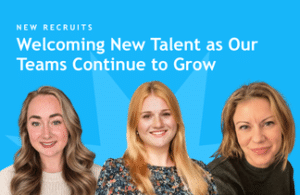
M·E·L Research is pleased to welcome four new colleagues to our growing team, strengthening our research and evaluation expertise as we continue to expand our services and support clients.
The appointments of Laura Karban, Associate Director; Bethan Jewsbury, Senior Evaluation Managers; and Chloe Parker, Research Manager, alongside Rhoslyn Davies, who joins us on a short-term basis to provide additional senior evaluation support, bring a wealth of experience across social research, evaluation, public policy…
It was an absolute honour to attend the Women’s Health Conference in London this week, bringing together clinicians, policymakers, campaigners and others passionate about improving women’s health.
As a researcher specialising in women’s health social research, I was excited to have the opportunity to learn, be challenged and exchange ideas with people who share that passion. And I wasn’t disappointed.
There has (quite rightly) been a lot of discussion recently about the gender health gap. But some of the evidence shared…
We are pleased to be working with the MS Society on new health and care social research exploring how health and care services can better support people with multiple sclerosis (MS) and help reduce avoidable hospital admissions.
The health and care social research study will focus on opportunities for earlier intervention and more coordinated, preventative support, while recognising that hospital admission is sometimes clinically necessary. It will…
Last week, I had the opportunity to speak at Collections Inside & Out, a symposium hosted at National Trust Chirk Castle & Garden, bringing together people working across gardens, horticulture, heritage, collections and interpretation.
I was, perhaps, a slight interloper among so many people with deep horticultural expertise but every presentation was incredibly interesting and I learned a lot – and broadly managed to follow the general flow of what was being said (still not 100% au fait with taxa…
We’re pleased to share that our Commercial Director, Elliot Simmonds, will be speaking at the Collections Inside & Out symposium at National Trust Chirk Castle & Garden on 24 September 2026. Bringing together professionals working across heritage collections, gardens and landscapes, the symposium will explore the relationship between indoor and outdoor heritage and the opportunities created by thinking about them as part of a connected visitor experience.
Elliot’s session, “Integrating Indoor…
M·E·L Research has been named the winner of the Award for Outstanding Contribution to Social Value & Ethical Research 2026 at the UK Enterprise Awards.
The award recognises the values that shape both the work we choose to undertake and the way we deliver it. From building trauma-informed practices into our research to improving inclusion and reinvesting in the communities around us, social responsibility is part of how we operate every day.
M·E·L Research joined the British Dyslexia Association (BDA) at the House of Lords this week for the launch of a new report exploring the experiences of dyslexic young people who are not in employment, education or training (NEET).
Tamsin Maries, Senior Research Manager, and Elliot Simmonds, Commercial Manager, represented M·E·L Research at the event…
New UK-wide research from M·E·L Research’s SPARK report shows improving mental health indicators alongside continuing exposure to suicide, widespread lifetime suicidal thoughts and significant gaps in practical knowledge.
Suicide prevention depends on understanding not only how many people are affected, but also how confident the public feel about recognising risk, starting difficult conversations and finding appropriate support. The Spring 2026 SPARK report from M·E·L Research brings these issues together, providing a detailed picture of attitudes…