I was first introduced to the concept of giving children a voice, especially in matters that affect them, at university. I remember it so clearly, the concept blew my mind. I remember thinking, “Of course they should”, but the truth was that this jarred with reality. That lack of listening to children and young people in market research is something I’ve seen persist even today, and it’s why this topic feels so important to me as a researcher.
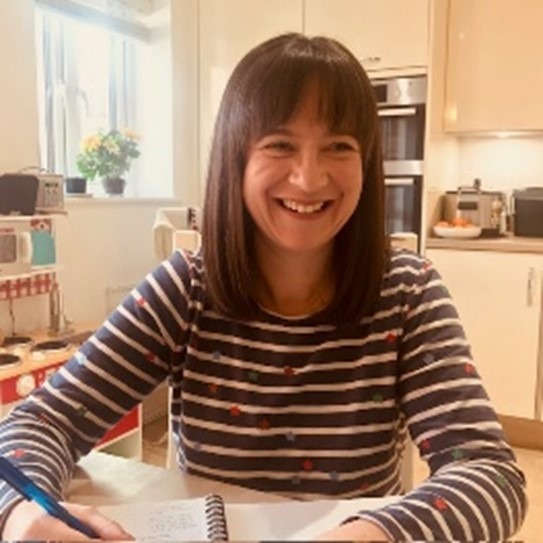
Tamsin Maries
Growing up in the 80s and 90s, we’d certainly moved beyond the Victorian concept of ‘children should be seen and not heard’, but it was unusual for children to be asked or encouraged to give an opinion, let alone to be involved in children and young people market research.
One of my lecturers introduced us to the 1989 UN Convention on the Rights of the Child (UNCRC)(1), in which Article 12 essentially states that children have the right to give opinions on issues that affect them, and that adults should listen and take them seriously.
It’s a powerful ideal, but one that, nearly 40 years on, still isn’t realised in many aspects of children’s lives. A recent example of progress could arguably include the UK government’s plan to reduce the voting age to 16. This is, however, likely to be politically motivated, rather than about the recognition of young people’s agency, and I’m not convinced we have moved forward enough on this as a society.
Why do children still hesitate to share their opinions?
Giving children and young people a voice is something I’ve worked to address in my small corner of the world as a researcher for a number of years. And I was reminded of it again on a recent project, where I had the privilege of speaking with children and young people about their experiences at school.
Among the many insights that I uncovered, one thing stood out to me – so many of them were uncertain and hesitant when asked what they thought. Their reactions and body language showed me how unusual it was for them to be asked their opinion. Many looked to parents before answering, as if needing help forming ideas about what they should say or to check what their opinion should be. Possibly even seeking permission to speak on certain topics. It was a stark reminder that children are too often spoken for, rather than spoken with.
Are adults unintentionally silencing young voices in children and young people market research?
Adults, whether parents, educators, policymakers, and even researchers, can underestimate children’s ability to reflect, articulate, and contribute meaningfully to conversations. Adult voices tend to dominate, even in settings designed with children in mind. Time constraints, power dynamics, and assumptions about children’s capacity can all mean that young voices often go unheard.
But from the children and young people market research I have done over the years, and as a parent, it’s clear to me that children and young people are experts in their own lives. In this recent project, they gave me insight and a view into their world at school that a teacher or parent just could not have given me. Children and young people experience the world in a different way to adults. They are far more likely to be subject to the behaviours and decisions of others, far more likely to be passive actors in the settings they find themselves in, far less likely to have agency in their lives to voice an opinion and to fight for what they need and deserve. And we need to know about this. We need to know what this feels like, what needs to be changed, what needs to be done better. And we can only do that by asking them and listening, really listening.
Whatever the setting, children have perspectives that are not only valid, but essential for us adults to hear. When adults don’t listen, we risk designing policies, services, and environments that do not work for the children and young people they are intended to support.
As I write this, I can’t help thinking about the current UK education and SEND systems and the stories we hear about the numbers of children that don’t thrive or achieve their potential as a result of a one-size-fits-all model designed by adults.
Creating safe spaces for children to speak freely as market and social researchers
As researchers, we have a responsibility to make space for children’s voices. I feel so strongly about this. And we need to do this in ways that feel safe, respectful, and empowering. It is not enough to simply ask a question and expect an answer. We need to work to actively address the power imbalance between adults and children. We need to reassure children that there are no right or wrong answers. It might sound obvious, but this helps break down the assumption, reinforced by school, that adults are there to assess or correct them and that adults know all the answers.
What research methods help children feel comfortable sharing their views?
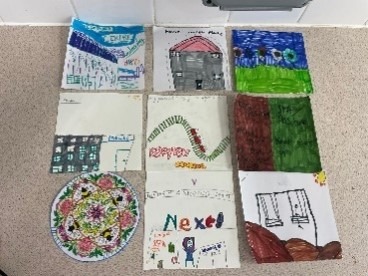
We can use age-appropriate, creative research methods, such as the drawings, stories, and games used by M·E·L Research’s Evaluation team to elicit insights from the children of the Invictus Games competitors in Canada earlier this year. We can slow down and create comfortable and informal settings.
Graffiti wall made by children of Invictus Games competitors
Drawings completed by children during market research
We can make it clear that their thoughts are valuable and valid, even if, and perhaps especially if, they differ from adult views. We should also give children feedback about how their views will be used. Taking part in research can be empowering, but only if it feels like their voice has an impact. We need to show them the difference their input makes.
Is listening to children just good research or a moral responsibility?
Ultimately, I believe that listening to children and young people is not just a methodological choice for researchers, but a moral one too. When we give children the space to speak, take them seriously and actively encourage them to have and give opinions, we’re not just collecting data. We’re upholding their rights, building their confidence, and making sure that decisions made about them are shaped by them. We’re helping to create future adult citizens that feel comfortable giving their opinion, are happy to question and challenge the status quo, to push things forward, and to make changes that benefit us all.
Whether you’re a public body, charity, or organisation looking to understand your audience, evaluate impact, or inform future strategies, we’re here to help.
Get in touch with the M·E·L Research team today via our ‘Get in touch’ form below to see how our expert researchers can support your goals. Alternatively, you can email the team at info@melresearch.co.uk.
How do we demonstrate the true value of culture and heritage? And are we measuring everything that matters?
These were two of the questions that stood out during the third day of the Culture and Heritage Capital: Putting Theory into Practice conference.
Cultural organisations have long recognised that their impact extends beyond visitor numbers, ticket sales and tourism revenue. Museums, heritage sites and cultural programmes can support mental health and wellbeing, strengthen community connections, create opportunities for learning and preserve our shared…
M·E·L Research is pleased to be working with the British Film Institute (BFI) on a three-year evaluation of the BFI Film Academy programme. Since 2012, BFI Film Academy has supported young people to develop skills, confidence, knowledge and networks and explore routes into careers across the screen industries. The refreshed 2026–2029 programme builds on this experience, creating connected pathways from early engagement through to specialist training, mentoring, placements and industry-facing progression, with a strong emphasis on…
M·E·L Research is pleased to welcome four new colleagues to our growing team, strengthening our research and evaluation expertise as we continue to expand our services and support clients.
The appointments of Laura Karban, Associate Director; Bethan Jewsbury, Senior Evaluation Managers; and Chloe Parker, Research Manager, alongside Rhoslyn Davies, who joins us on a short-term basis to provide additional senior evaluation support, bring a wealth of experience across social research, evaluation, public policy…
It was an absolute honour to attend the Women’s Health Conference in London this week, bringing together clinicians, policymakers, campaigners and others passionate about improving women’s health.
As a researcher specialising in women’s health social research, I was excited to have the opportunity to learn, be challenged and exchange ideas with people who share that passion. And I wasn’t disappointed.
There has (quite rightly) been a lot of discussion recently about the gender health gap. But some of the evidence shared…
We are pleased to be working with the MS Society on new health and care social research exploring how health and care services can better support people with multiple sclerosis (MS) and help reduce avoidable hospital admissions.
The health and care social research study will focus on opportunities for earlier intervention and more coordinated, preventative support, while recognising that hospital admission is sometimes clinically necessary. It will…
Last week, I had the opportunity to speak at Collections Inside & Out, a symposium hosted at National Trust Chirk Castle & Garden, bringing together people working across gardens, horticulture, heritage, collections and interpretation.
I was, perhaps, a slight interloper among so many people with deep horticultural expertise but every presentation was incredibly interesting and I learned a lot – and broadly managed to follow the general flow of what was being said (still not 100% au fait with taxa…
We’re pleased to share that our Commercial Director, Elliot Simmonds, will be speaking at the Collections Inside & Out symposium at National Trust Chirk Castle & Garden on 24 September 2026. Bringing together professionals working across heritage collections, gardens and landscapes, the symposium will explore the relationship between indoor and outdoor heritage and the opportunities created by thinking about them as part of a connected visitor experience.
Elliot’s session, “Integrating Indoor…
M·E·L Research has been named the winner of the Award for Outstanding Contribution to Social Value & Ethical Research 2026 at the UK Enterprise Awards.
The award recognises the values that shape both the work we choose to undertake and the way we deliver it. From building trauma-informed practices into our research to improving inclusion and reinvesting in the communities around us, social responsibility is part of how we operate every day.