Progress, persistence and the gaps in suicide prevention knowledge
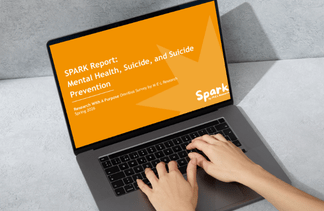
New UK-wide research from M·E·L Research’s SPARK report shows improving mental health indicators alongside continuing exposure to suicide, widespread lifetime suicidal thoughts and significant gaps in practical knowledge.
Suicide prevention depends on understanding not only how many people are affected, but also how confident the public feel about recognising risk, starting difficult conversations and finding appropriate support. The Spring 2026 SPARK report from M·E·L Research brings these issues together, providing a detailed picture of attitudes, risk and knowledge across the UK.
SPARK stands for Suicide Prevention: Attitudes, Risk and Knowledge. The latest findings come from an online survey of 1,522 UK adults aged 16 and over, conducted between 23 April and 19 May 2026 as part of M·E·L Research’s Research with a Purpose omnibus. The results were weighted by age, sex and Government Office Region to reflect the UK adult population.
Health indicators have recovered, but progress has slowed
The longer-term picture contains some grounds for cautious optimism. Self-reported poor mental health, poor physical health and experience of mental health issues in the previous 12 months all peaked around Spring 2023, before improving. By Spring 2026, 16% described their mental health as poor, 15% described their physical health as poor and 16% said they had experienced mental health issues during the past year.
However, the latest wave suggests that the recovery has largely flattened out. Just 56% rated their current mental health as good, five percentage points lower than in Autumn 2025. The same proportion rated their physical health as good, down three percentage points. Although the longer-term trend is better than at the 2023 peak, the short-term movement is a reminder that improvement cannot be taken for granted.
Suicide and self-harm affect a wide circle
The research underlines how far the effects of suicide and self-harm extend through families, friendship groups, workplaces and communities. In Spring 2026, 26% of adults said they knew someone who had died by suicide, 24% knew someone who had made a suicide attempt and survived, and 33% knew someone who had self-harmed. 7% had witnessed a suicide attempt and 2% had witnessed a death by suicide.
The impact is not confined to those with the most direct experience. Among people who knew someone who had died by suicide, 28% believed the death had affected more than 50 people, including 12% who believed that 100 or more people had been affected. Among those who knew someone who had self-harmed, 26% said the experience had affected them greatly and a further 45% said it had affected them somewhat.
These findings reinforce the case for viewing suicide prevention as a whole-community issue. Support may be needed not only by an individual in crisis, but also by those around them, including people whose connection to the event may not be immediately visible.
Suicidal thoughts remain widespread
Nearly two in five adults, 39%, said they had at some point had thoughts about taking their own life, including thoughts they would never act upon. This is lower than the 42% recorded in Spring 2022, but it has remained broadly consistent at around two in five across the series.
More serious experiences have also remained comparatively stable. In Spring 2026, 18% said they had seriously considered suicide, made a plan or attempted suicide. One in ten had made a plan or an attempt, while 6% reported having attempted suicide. The proportion reporting the more serious group of experiences peaked at 22% in Spring 2023, but has otherwise remained close to one in five.
It is important to interpret these figures correctly: they measure whether people have ever had these experiences, rather than current suicidal intent. Even so, their scale shows why suicide prevention cannot be treated as a marginal or highly specialised concern.
Knowledge is improving in places, but practical confidence is uneven
There are encouraging signs in public knowledge. In Spring 2026, 62% felt confident that they would know where to find information about suicide and suicide prevention, up from 59% in Autumn 2025. Confidence in recognising signs that someone might be struggling with their mental health rose from 51% to 57%, while confidence in spotting signs that someone may be at risk of suicide increased from 34% to 38%.
Yet the findings also reveal a persistent gap between general awareness and confidence in taking practical action. Only 36% were confident they would know how best to ask someone whether they were having suicidal thoughts. Half felt confident about where to direct someone at risk for support , while 43% knew where to how to continue the conversation if the person said they were thinking about suicide. By contrast, 62% felt confident that they would know where to get support if they themselves were struggling with their mental health.
This matters because recognising distress is only one part of an effective response. People also need the language and confidence to ask directly, listen safely and connect someone with appropriate help.
Training and education have room to reach further
The report also examines how people learn about mental health and suicide. Reading information on relevant websites, such as Mind or Samaritans, was the most common route in Spring 2026, reported by 27%, recovering slightly from 25% in Autumn 2025 but remaining below the 41% recorded in Spring 2025.
12% had worked for an organisation offering mental health training, while 7% had worked somewhere offering suicide awareness training. 15% had watched an online video about suicide awareness, 10% had attended a talk and 10% had taken a suicide awareness, intervention or prevention course such as ASIST or Suicide First Aid.
The increase in attendance at suicide awareness talks is welcome, but the overall figures suggest that structured learning still reaches a minority of adults. The decline in learning through employer-provided training is particularly noteworthy. Employers, public services, voluntary organisations and community groups all have an opportunity to make practical suicide prevention knowledge more widely available.
From evidence to action
Taken together, the Spring 2026 findings present a nuanced picture. Some measures have improved since the period of greatest strain in early 2023, and confidence in locating information or recognising signs has risen. At the same time, suicidal thoughts remain a common lifetime experience, exposure to suicide and self-harm is widespread, and many people still lack confidence in how to begin or sustain a potentially life-saving conversation.
For decision-makers, campaigners and service providers, the implications are clear. Suicide prevention strategies should continue to build general awareness, but place greater emphasis on practical skills, accessible pathways to support and help for the wider networks affected by suicide and self-harm. The data also demonstrates the importance of tracking public knowledge over time, so that activity can respond to persistent gaps rather than relying on assumptions.
SPARK was created to provide robust, actionable evidence for precisely this purpose. The Spring 2026 report shows that progress is possible, but also that sustained attention, education and support remain essential.
About M·E·L Research’s quarterly SPARK report
What does SPARK stand for? Suicide Prevention: Attitudes, Risk & Knowledge. Our role is not to deliver direct suicide prevention services, but to empower the organisations and individuals who do. Our mission is to equip decision-makers, campaigners, and service providers with the data they need to drive informed action and lasting impact through robust, actionable suicide prevention statistics and insights.
The latest SPARK Report was released in August 2026 and can be found, here: Latest Suicide Prevention Statistics – SPARK Report Spring 2026
Conducted by M·E·L Research, SPARK is a catalyst for change, providing critical evidence that helps to shape suicide prevention strategies in the UK. Visit the SPARK webpage for further information.
Do you need support?
If you or someone you care about is experiencing an emotional or mental health crisis needing immediate attention: Reach out to the person’s GP, the GP out-of-hours service, or call NHS on 111.
If you fear for your (or someone else’s) immediate safety: Guide them to Accident and Emergency or dial 999 for immediate assistance.
Samaritans – Call 116 123 or email jo@samaritans.org (24/7). Welsh line: 0808 164 0123 (24/7)
National Suicide Prevention Helpline UK – Call 0800 689 5652.
Papyrus HOPELINEUK – For under 35s or those worried about someone under 35: 0800 068 4141, pat@papyrus-uk.org, or text 07786 209 697 (24/7)
Campaign Against Living Miserably – Call 0800 58 58 58 or live chat (5pm – midnight daily)
Latest News
M·E·L News
Collections inside and out: thinking differently about gardens, heritage and the visitor experience
September 2026
Last week, I had the opportunity to speak at Collections Inside & Out, a symposium hosted at National Trust Chirk Castle & Garden, bringing together people working across gardens, horticulture, heritage, collections and interpretation.
I was, perhaps, a slight interloper among so many people with deep horticultural expertise but every presentation was incredibly interesting and I learned a lot – and broadly managed to follow the general flow of what was being said (still not 100% au fait with taxa…
Read the full post
M·E·L News
Elliot Simmonds to present at Collections Inside & Out Symposium
September 2026
We’re pleased to share that our Commercial Director, Elliot Simmonds, will be speaking at the Collections Inside & Out symposium at National Trust Chirk Castle & Garden on 24 September 2026. Bringing together professionals working across heritage collections, gardens and landscapes, the symposium will explore the relationship between indoor and outdoor heritage and the opportunities created by thinking about them as part of a connected visitor experience.
Elliot’s session, “Integrating Indoor…
Read the full post
M·E·L News
M·E·L Research recognised for outstanding contribution to social value and ethical research
August 2026
M·E·L Research has been named the winner of the Award for Outstanding Contribution to Social Value & Ethical Research 2026 at the UK Enterprise Awards.
The award recognises the values that shape both the work we choose to undertake and the way we deliver it. From building trauma-informed practices into our research to improving inclusion and reinvesting in the communities around us, social responsibility is part of how we operate every day.
Read the full post
Industry Insights
Preventing suicide before the fire starts
September 2026
Across Europe, we have seen devastating wildfires destroy homes, habitats and communities. They offer us a powerful analogy for how we think about suicide prevention.
When a fire is raging, everything must be done to put it out. Firefighters, emergency services and communities mobilise to save lives. But even when the fire is eventually extinguished, enormous damage may already have been done, and recovery can take years. That is why fire services don’t only fight fires. They also invest in prevention: identifying risks, educating people, installing smoke alarms, creating fire breaks and trying to stop…
Read the full post
Industry Insights
What if the evidence we need to prevent the next child’s death is on their phone?
September 2026
My son Jools was 14 years old when he died suddenly in April 2022. There was no note. There was no offline evidence that explained why he died. No one had seen or been aware of any adverse mental health issues, and at his original inquest the coroner could not be sure that Jools was in a suicidal mood. More than four years later, I am still trying to understand what happened to my son. Yet one enormous part of Jools’ life was not properly explored following his death: his digital world. Like almost every teenager, Jools had a life on his phone. Social…
Read the full post
Industry Insights
Building a robust evidence base to support the growth of women’s sport
August 2026
Women’s sport is entering an important new phase, and we have been privileged to work with clients such as Kick It Out, WSL Football, Sport Wales and the Commonwealth Games, and witness and the experiences, impacts and drivers of this growth. Audiences are growing, competitions are evolving and sports organisations are exploring new ways to improve the matchday experience, deepen fan relationships and develop more sustainable commercial models. With that momentum comes significant opportunity, but it also raises important questions. As…
Read the full post