Is It Time to Take Decision-Making out of Politics?
By Elliot Simmonds, Commercial Director
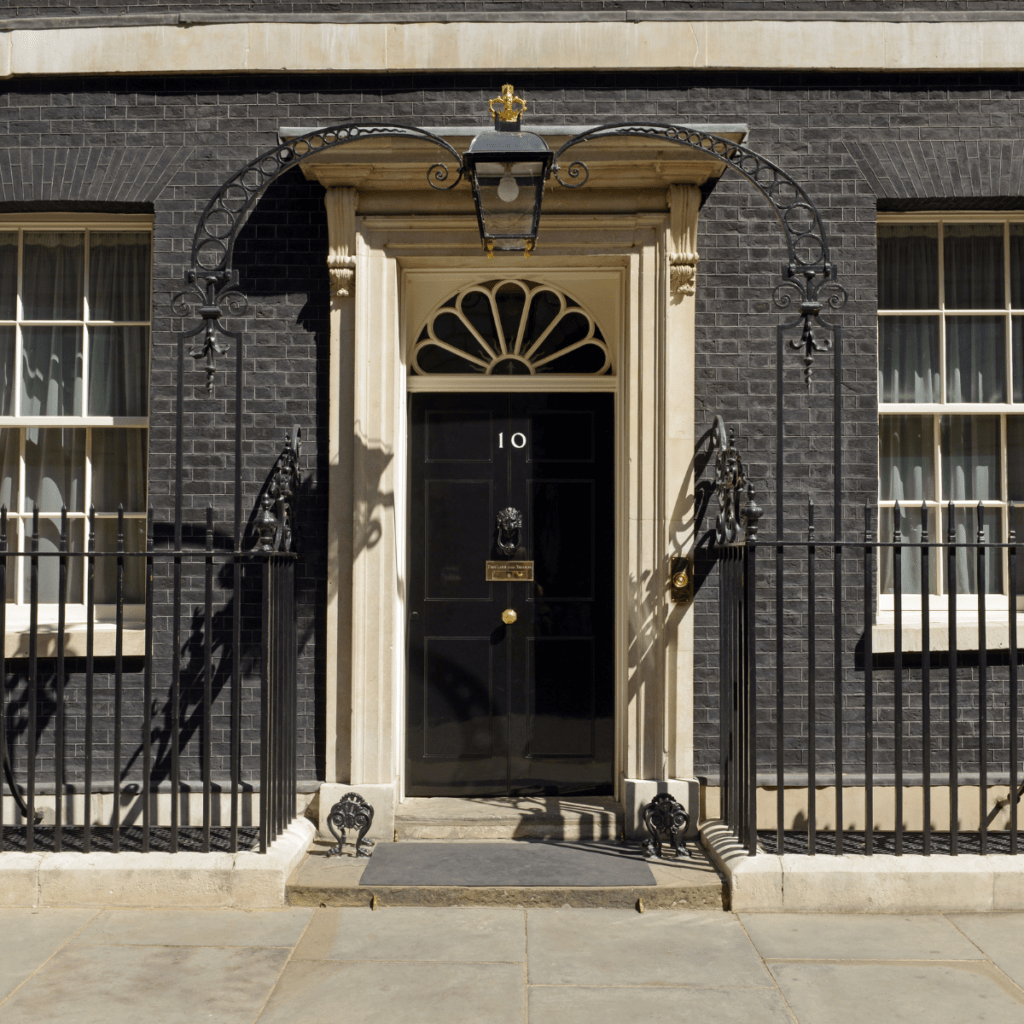
I should probably start with a caveat. This is not a serious constitutional proposal. Or at least, it wasn’t when I started writing it. It began as a slightly tongue-in-cheek response to the latest instalment in what now feels like Britain’s longest-running political drama: “Who is in Number 10 this week?”
That might sound like an odd starting point for a piece on a research agency website. But many of our clients at M·E·L Research operate in spaces that are directly shaped by political decision-making: health, education, local government, regulation, justice, transport, skills, the environment and public services more broadly. For them, who makes decisions matters. So does how long those decisions last, how clearly they are made, and whether they survive the next reshuffle, relaunch or change of political weather.
I am not a constitutional lawyer, which will become increasingly obvious if this idea is ever exposed to one, but with Keir Starmer’s resignation, the UK is now looking at its seventh Prime Minister in a decade. Or, put another way, the sixth change of Prime Minister since David Cameron left Downing Street in 2016. That feels like quite a lot.
Of course, in a parliamentary democracy we do not technically vote for a Prime Minister – we vote for a local MP and the party with the confidence of the House of Commons forms a government. The leader of that party usually becomes Prime Minister. I understand the mechanism. But I am not sure the mechanism is doing much for public confidence at the moment.
In practice, people do feel they are voting for a direction of travel. They vote for a set of promises, a manifesto, a tone, a broad policy settlement and, frankly, they do often vote for a leader. When that leader changes, and when policies are abandoned, reversed, diluted, relaunched, rediscovered or re-announced with slightly different branding, it becomes harder to sustain the idea that the public is getting what it voted for.
That is not a party-political point. It is a systems point. I have voted for two different parties and spoiled a ballot in the last three elections, so I am hardly claiming the moral high ground for consistency.
But, over the last decade, the country has had Conservative Prime Ministers with very different instincts, mandates and policy priorities. It now faces the possibility of a Labour Prime Minister replacing another Labour Prime Minister not long after a landslide general election. Some of that is simply politics. Some of it is the natural messiness of governing. Some of it is the result of circumstances. Some of it is probably personality politics. And some of it raises a more uncomfortable question.
Are some decisions too important, too long term, or too technically complex to be left entirely within the short-term incentives of party politics, especially if political leadership itself is becoming less stable?
The tyranny of the five-year horizon
A general election cycle is a very blunt instrument. It is long enough for governments to get tired (and for electorates to tire of governments), but not always long enough to see whether a serious policy is working. It is long enough to make a promise, but often too short to deliver it. It is long enough to create accountability, but not necessarily long enough to encourage honesty. It is long enough to reverse a policy, but not usually long enough to undo previous damage.
This is compounded by the fact that many of the biggest policy challenges facing the UK and the world do not fit neatly into a five-year box.
Education and skills policy is a good example. If we make a major change to early years provision, the national curriculum, vocational education, teacher training or post-16 pathways, the impact may visible for many years. The children affected may not reach the labour market for a decade or more. At the same time, the Minister responsible for the policy may have moved on after eighteen months.
Health is similar. Prevention, workforce planning, social care, public health, estates, digital infrastructure and population health all require long-term thinking. Yet health policy is often framed through the immediate pressures of waiting lists, winter crises and political point-scoring.
The environment is perhaps the most obvious example of all. Climate, biodiversity, land use, water quality, energy infrastructure and housing all need joined-up thinking over decades. But the political rewards are usually attached to announcements, not outcomes.
So, here is the deliberately provocative thought: should some areas of domestic policy be taken, at least partly, out of day-to-day party politics?
Not removed from democracy entirely and handed over to a self-selecting group of experts in a windowless room. But protected, in some way, from the constant churn of reshuffles, leadership contests, relaunches and electoral triangulation.
A 20-year horizon?
Imagine, for example, that education and skills, health, and the environment were each overseen by standing cross-party committees with a statutory 20-year horizon. I do not mean committees that simply advise government, publish a thoughtful report and then watch as it gathers dust on a departmental shelf. We already have Select Committees, and they are one of the better parts of the Westminster system. They are cross-party, they take evidence, they scrutinise government and they often bring a level of seriousness to policy that is not always visible in the Commons chamber.
But Select Committees mainly scrutinise. They do not decide.
The version I am suggesting is different. These committees would have real decision-making power over defined long-term policy areas. Their job would not be to run every school, hospital, river system or training programme, but to set the long-term framework within which governments operate. They would establish the outcomes, the direction of travel, the tests for success and the points at which policy should be reviewed.
The committees could include MPs from across parties, but also independent experts, practitioners and structured direct public input. They could have a duty to consider value for money, distributional impacts, implementation risk and intergenerational fairness. They could be required to report annually to Parliament, publish their evidence, and review major decisions at fixed points.
The government of the day would still matter enormously. It would still set budgets. It would still make choices about taxation, foreign policy, security, spending priorities (though I’d argue for some ring-fencing of committee budgets), legislation and implementation. But on certain long-term domestic questions, it would be operating within a framework that was deliberately designed to outlast one Parliament, one Prime Minister, one Secretary of State etc.
That may sound dull. But sometimes dull is what you need.
The public may be more grown up than the debate allows
There is another part of this argument that is becoming increasingly clear for those of us who work in research.
We often talk about “public opinion” as if it is a fixed thing, waiting to be measured. Sometimes it is. If you ask people whether they are satisfied or dissatisfied, worried or reassured, supportive or opposed, you will get an answer.
But on many complex issues, especially where there are trade-offs, uncertainty or ethical tensions, first reactions are only part of the story. What people think after they have had time, evidence, space and structured discussion can be different from what they say in a quick poll. Not always dramatically different. Not always more liberal, conservative, radical or moderate. Just more considered.
That is where Citizens’ Juries, deliberative workshops and public panels can be so valuable.
Direct democracy at national scale is difficult. Referendums, as we know, can reduce complex issues to binary choices. They can also become proxies for other frustrations. But deliberative approaches offer something else. They bring a (relatively – in the context of the entire population) small, carefully recruited, representative group of people together, give them access to balanced evidence, allow them to question experts, hear different perspectives, discuss the issue properly, and reach a view. Most importantly, it provides a facilitated space to not only hear but listen to other perspectives.
At M·E·L Research, we have seen this in practice. Our work with partners on public views around assisted dying showed that members of the public can engage with profoundly sensitive ethical issues in a serious, thoughtful and nuanced way. The same is true of our work on AI in legal services, where participants considered not just whether technology might be useful, but what protections, safeguards and responsibilities would be needed as the market develops. We are currently doing work mapping how people think about and make moral choices, which has been incredibly nuanced.
These are not easy topics and do not lend themselves to a quick show of hands. They require people to think about risk, fairness, community, access, harm, personal autonomy, professional accountability and the limits of regulation. And yet, when given the opportunity, people can do that thinking.
So perhaps we should consider whether we need better routes for informed public judgement to shape decisions before they are turned into policy – and whether the public could have a role to play in my committees.
What would elected governments actually do?
If we took this thought experiment seriously, what would be left for the government of the day?
Quite a lot, as it happens.
Foreign policy. National security. Emergency response. Fiscal decisions. Taxation. Major legislative priorities. The political choices that genuinely flow from ideology, manifesto commitments and democratic mandate. There would still be more than enough to argue about.
In fact, you could flip the relationship around. Rather than long-term committees holding government to account only through advice and scrutiny, perhaps elected governments should also be responsible for holding those committees to account. If a committee has real decision-making power, then it needs challenge. It needs transparency. It needs Ministers, Parliament, the media and the public asking whether it is doing its job properly.
That would feel strange, because it reverses part of the Westminster habit. We are used to committees examining government. We are less used to the idea that government might examine, challenge and test a standing long-term body that has been given authority over a particular policy settlement.
But maybe that is not such a bad thing. The point is not to remove politics from public life. That would be impossible, and probably undesirable. The point is to stop pretending that every domestic system can be endlessly reinvented every time a new party, leader or Minister is appointed.
Governments should still make course corrections. But on issues that require long-term stability, those corrections should be more like steering a cruise liner than yanking the wheel of a speedboat.
Proportional representation by the back door?
There is a slightly awkward point here. What I am describing sounds, in many ways, like proportional representation by the back door.
The committees would be made up, at least in part, of elected MPs. Their political composition would need to reflect Parliament rather than simply the government majority. If decision-making moved to those committees, then compromise would become a more routine part of how policy is made by design.
There would still be first-past-the-post elections unless the electoral system itself changed. But the spirit of the idea is similar: compromise, coalition-building, negotiated policy and an acknowledgement that the country is rarely as singular in its views as a parliamentary majority can make it appear. Some people would see that as a strength. Others would see it as a dilution of democratic choice. And they might have a point.
If a party wins an election, should it not be allowed to govern? If voters want a change of direction, should they not get one? If a government has to operate within frameworks set by cross-party committees, does that blur accountability? When something goes wrong, who gets the blame: the Minister, the committee, Parliament, the experts, the public panel, or all of the above?
These are not small objections. A system that takes decisions away from elected governments can become remote, cautious and self-protecting. Expert-led bodies can reflect the assumptions of the people who sit on them. Cross-party consensus can sometimes mean the public is offered a narrower range of choices, not a better one. Citizens’ Juries can be powerful, but they are not a substitute for the electorate as a whole (but I’d argue the electorate isn’t getting day to day decision making authority anyway!).
If this idea were ever to move beyond a blog post, it would need serious safeguards. The remit of each committee would need to be tightly defined. Its decisions would need to be transparent. Its membership would need to be balanced. Public deliberation would need to be meaningful rather than decorative. There would need to be review points, appeal mechanisms and clear lines of accountability to Parliament.
But even with all those caveats, I am not sure the current system is obviously more democratic in practice.
If voters choose one thing and then get several Prime Ministers, several policy resets and a series of decisions that were never really put to them, are they meaningfully getting what they voted for? If major long-term policy keeps changing because the political weather changes, is that democratic responsiveness or institutional drift? If the public can engage thoughtfully with complex issues when given the chance, why do we so rarely give them that chance before the decision has already been packaged for debate?
Perhaps a bit of proportional-representation-light is not such a terrible idea. Perhaps negotiated policy is not always a failure of politics.
Maybe the answer is not to take decision-making out of politics. Maybe that is too neat, and too glib. But perhaps we should take some decision-making out of short-term party management and place it somewhere more durable, more deliberative and more accountable over time.
Need support with your social research?
Whether you’re a public body, charity, or organisation looking to understand your audience, evaluate impact, or inform future strategies, we’re here to help.
Get in touch with the M·E·L Research team today via our ‘Get in touch’ form below to see how our expert researchers can support your goals. Alternatively, you can email the team at info@melresearch.co.uk.
Latest News
Industry Insights
Beyond visitor numbers: Rethinking how we measure the value of culture and heritage
November 2026
How do we demonstrate the true value of culture and heritage? And are we measuring everything that matters?
These were two of the questions that stood out during the third day of the Culture and Heritage Capital: Putting Theory into Practice conference.
Cultural organisations have long recognised that their impact extends beyond visitor numbers, ticket sales and tourism revenue. Museums, heritage sites and cultural programmes can support mental health and wellbeing, strengthen community connections, create opportunities for learning and preserve our shared…
Read the full post
M·E·L News
M·E·L Research appointed to evaluate the BFI Film Academy programme
October 2026
M·E·L Research is pleased to be working with the British Film Institute (BFI) on a three-year evaluation of the BFI Film Academy programme. Since 2012, BFI Film Academy has supported young people to develop skills, confidence, knowledge and networks and explore routes into careers across the screen industries. The refreshed 2026–2029 programme builds on this experience, creating connected pathways from early engagement through to specialist training, mentoring, placements and industry-facing progression, with a strong emphasis on…
Read the full post
M·E·L News
M·E·L Research welcomes new talent as our teams continue to grow
October 2026
M·E·L Research is pleased to welcome four new colleagues to our growing team, strengthening our research and evaluation expertise as we continue to expand our services and support clients.
The appointments of Laura Karban, Associate Director; Bethan Jewsbury, Senior Evaluation Managers; and Chloe Parker, Research Manager, alongside Rhoslyn Davies, who joins us on a short-term basis to provide additional senior evaluation support, bring a wealth of experience across social research, evaluation, public policy…
Read the full post
Industry Insights
Women’s health social research: We’ve talked about the problems. Now let’s do something about them.
October 2026
It was an absolute honour to attend the Women’s Health Conference in London this week, bringing together clinicians, policymakers, campaigners and others passionate about improving women’s health.
As a researcher specialising in women’s health social research, I was excited to have the opportunity to learn, be challenged and exchange ideas with people who share that passion. And I wasn’t disappointed.
There has (quite rightly) been a lot of discussion recently about the gender health gap. But some of the evidence shared…
Read the full post
M·E·L News
Collections inside and out: thinking differently about gardens, heritage and the visitor experience
September 2026
Last week, I had the opportunity to speak at Collections Inside & Out, a symposium hosted at National Trust Chirk Castle & Garden, bringing together people working across gardens, horticulture, heritage, collections and interpretation.
I was, perhaps, a slight interloper among so many people with deep horticultural expertise but every presentation was incredibly interesting and I learned a lot – and broadly managed to follow the general flow of what was being said (still not 100% au fait with taxa…
Read the full post
M·E·L News
Elliot Simmonds to present at Collections Inside & Out Symposium
September 2026
We’re pleased to share that our Commercial Director, Elliot Simmonds, will be speaking at the Collections Inside & Out symposium at National Trust Chirk Castle & Garden on 24 September 2026. Bringing together professionals working across heritage collections, gardens and landscapes, the symposium will explore the relationship between indoor and outdoor heritage and the opportunities created by thinking about them as part of a connected visitor experience.
Elliot’s session, “Integrating Indoor…
Read the full post
M·E·L News
M·E·L Research recognised for outstanding contribution to social value and ethical research
August 2026
M·E·L Research has been named the winner of the Award for Outstanding Contribution to Social Value & Ethical Research 2026 at the UK Enterprise Awards.
The award recognises the values that shape both the work we choose to undertake and the way we deliver it. From building trauma-informed practices into our research to improving inclusion and reinvesting in the communities around us, social responsibility is part of how we operate every day.
Read the full post