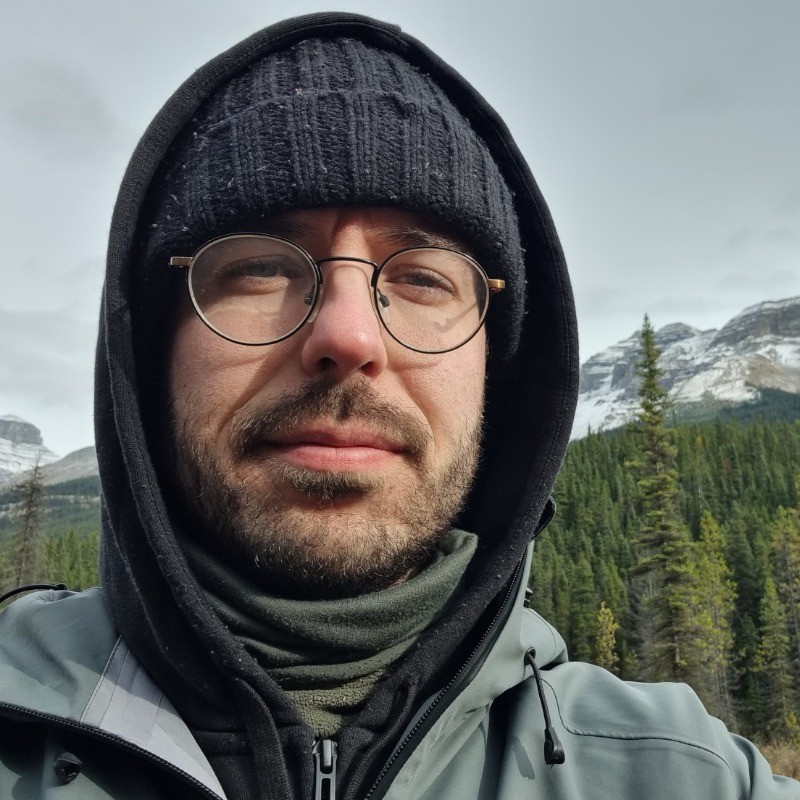
When I first read the SPARK data, one thing hit me hard: how many people don’t feel confident asking someone if they might be suicidal. At CALM, we know that being able to spot the signs that someone might be having suicidal thoughts, and asking them directly if they are feeling suicidal, can cut through a spiral of thoughts and ultimately protect that individual. That’s why this data says so much about the challenge we face and where we need to focus our energy.
Sam Heyes, Senior Insight Manager at Campaign Against Living Miserably
When we talk about suicide prevention, the first thing most people think of is statistics. How many lives were lost last year? How many people reported suicidal thoughts? Those numbers from the ONS and the APMS are important. They show us the scale of the challenge. But crucially, they do not tell us how to make things better.
That is where the SPARK report from M·E·L Research can add value. It does more than measure the problem. It helps us understand what people actually know, and whether they feel ready to step in if someone they care about is struggling.
At CALM, we believe suicide is not just an individual issue. It is a public health issue. To develop interventions, we need to understand the bigger picture: the confidence people have to have a healthy conversation about suicide, the nature of the stigma that still exists, and the barriers that can stop someone from getting the help they need.
Low confidence in having conversations about suicide is one of the reasons we created our C.A.R.E. Kit. The kit gives trusted adults such as parents, teachers, and mentors the tools and reassurance to have honest conversations with young people about suicide and mental health. We know those conversations can feel daunting. But they can also be life-saving. And thanks to SPARK, we can see that confidence is beginning to grow.
There is still more we would love to explore. What would someone actually do if they thought a friend might be suicidal? How do protective factors like strong relationships or community support change over time? What are the real attitudes people hold about suicide, and how do those attitudes shape culture? For CALM, that last piece is especially important, because shifting cultural narratives about suicide is at the heart of what we do.
SPARK has already influenced the way suicide prevention organisations like ours can work. It helps us move from simply knowing how big the problem is to understanding how we can change it. And in suicide prevention, that shift matters. Confidence is not a small detail. It can be the difference between silence and a life-saving conversation.
About Sam Heyes
Sam is the Senior Insight Manager at Campaign Against Living Miserably (CALM), where he leads research and data analysis to better understand how to engage the public in suicide prevention. With a background in behavioural and healthcare research, Sam is fascinated by the social, cultural, and psychological factors that influence why we behave the way we do – and how those insights can help build a society more confident in tackling difficult conversations about mental health.
About the SPARK Report
What does SPARK stand for? Suicide Prevention: Attitudes, Risk & Knowledge. Our role is not to deliver direct suicide prevention services, but to empower the organisations and individuals who do. Our mission is to equip decision-makers, campaigners, and service providers with the data they need to drive informed action and lasting impact through robust, actionable suicide prevention statistics and insights.
Conducted by M·E·L Research, SPARK is a catalyst for change, providing critical evidence that helps to shape suicide prevention strategies in the UK. Vist the SPARK webpage for further information.
Do you need support?
If you or someone you care about is experiencing an emotional or mental health crisis needing immediate attention: Reach out to the person’s GP, the GP out-of-hours service, or call NHS on 111.
If you fear for your (or someone else’s) immediate safety: Guide them to Accident and Emergency or dial 999 for immediate assistance.
Last week, I had the opportunity to speak at Collections Inside & Out, a symposium hosted at National Trust Chirk Castle & Garden, bringing together people working across gardens, horticulture, heritage, collections and interpretation.
I was, perhaps, a slight interloper among so many people with deep horticultural expertise but every presentation was incredibly interesting and I learned a lot – and broadly managed to follow the general flow of what was being said (still not 100% au fait with taxa…
We’re pleased to share that our Commercial Director, Elliot Simmonds, will be speaking at the Collections Inside & Out symposium at National Trust Chirk Castle & Garden on 24 September 2026. Bringing together professionals working across heritage collections, gardens and landscapes, the symposium will explore the relationship between indoor and outdoor heritage and the opportunities created by thinking about them as part of a connected visitor experience.
Elliot’s session, “Integrating Indoor…
M·E·L Research has been named the winner of the Award for Outstanding Contribution to Social Value & Ethical Research 2026 at the UK Enterprise Awards.
The award recognises the values that shape both the work we choose to undertake and the way we deliver it. From building trauma-informed practices into our research to improving inclusion and reinvesting in the communities around us, social responsibility is part of how we operate every day.
M·E·L Research joined the British Dyslexia Association (BDA) at the House of Lords this week for the launch of a new report exploring the experiences of dyslexic young people who are not in employment, education or training (NEET).
Tamsin Maries, Senior Research Manager, and Elliot Simmonds, Commercial Manager, represented M·E·L Research at the event…
New UK-wide research from M·E·L Research’s SPARK report shows improving mental health indicators alongside continuing exposure to suicide, widespread lifetime suicidal thoughts and significant gaps in practical knowledge.
Suicide prevention depends on understanding not only how many people are affected, but also how confident the public feel about recognising risk, starting difficult conversations and finding appropriate support. The Spring 2026 SPARK report from M·E·L Research brings these issues together, providing a detailed picture of attitudes…
M·E·L Research is pleased to be supporting the Diocese of Manchester with an independent consultation to help inform its future leadership. The research will provide opportunities for people connected with diocesan life, as well as members of the wider community, to share their perspectives on the local context, priorities for the years ahead and the qualities that will be important in future leadership.
Across Europe, we have seen devastating wildfires destroy homes, habitats and communities. They offer us a powerful analogy for how we think about suicide prevention.
When a fire is raging, everything must be done to put it out. Firefighters, emergency services and communities mobilise to save lives. But even when the fire is eventually extinguished, enormous damage may already have been done, and recovery can take years. That is why fire services don’t only fight fires. They also invest in prevention: identifying risks, educating people, installing smoke alarms, creating fire breaks and trying to stop…
My son Jools was 14 years old when he died suddenly in April 2022. There was no note. There was no offline evidence that explained why he died. No one had seen or been aware of any adverse mental health issues, and at his original inquest the coroner could not be sure that Jools was in a suicidal mood. More than four years later, I am still trying to understand what happened to my son. Yet one enormous part of Jools’ life was not properly explored following his death: his digital world. Like almost every teenager, Jools had a life on his phone. Social…